A clear shampoo bottle, an opaque squeeze tube and a heavy-looking cream jar can all belong to the same hair-care collection. They can also give customers three very different experiences. One is easy to pump with wet hands. Another stands upside down so the last of the conditioner reaches the cap. The third invites someone to scoop out a rich mask.
That is why packaging design is more than drawing a label. It is the combination of container, material, dispensing system and decoration . Get those four parts working together and a product can look distinctive, feel intuitive and remain practical to manufacture.
We will compare the packaging most often used for shampoos, conditioners, masks, serums and body products, then show how the pieces can form one coherent product line.
1. First, Know What Counts as Packaging
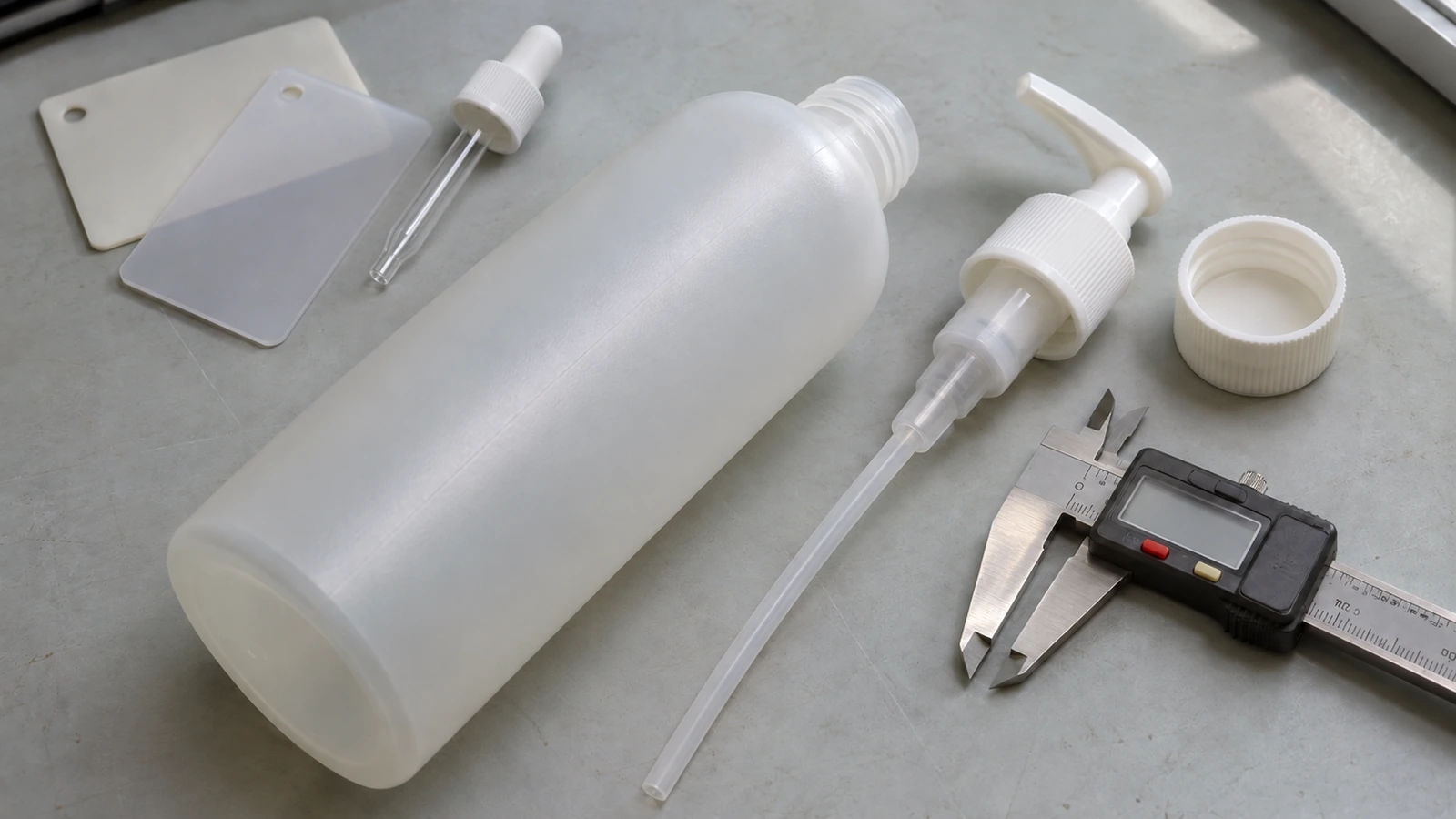
Imagine ordering a bottle of body wash online. The primary packaging is everything that directly contains or dispenses the wash: bottle, cap or pump, dip tube, liner and any product-contact seal. A decorative folding box or retail sleeve is secondary packaging . The corrugated shipping carton, dividers and protective materials that carry several units together are tertiary packaging .
Not every product needs all three. An everyday shampoo can go directly to shelf in a labeled bottle. A premium scalp serum might use a printed carton because its tiny bottle has little space for instructions. An e-commerce bundle may need protective dividers even when no individual retail box is used.
The bottle and closure contact the formula; the label usually does not. That is why package compatibility work concentrates on the product-contact components first.
The beginner's rule: choose the container and opening first. Decide how to decorate them after you know their shape and usable print area.
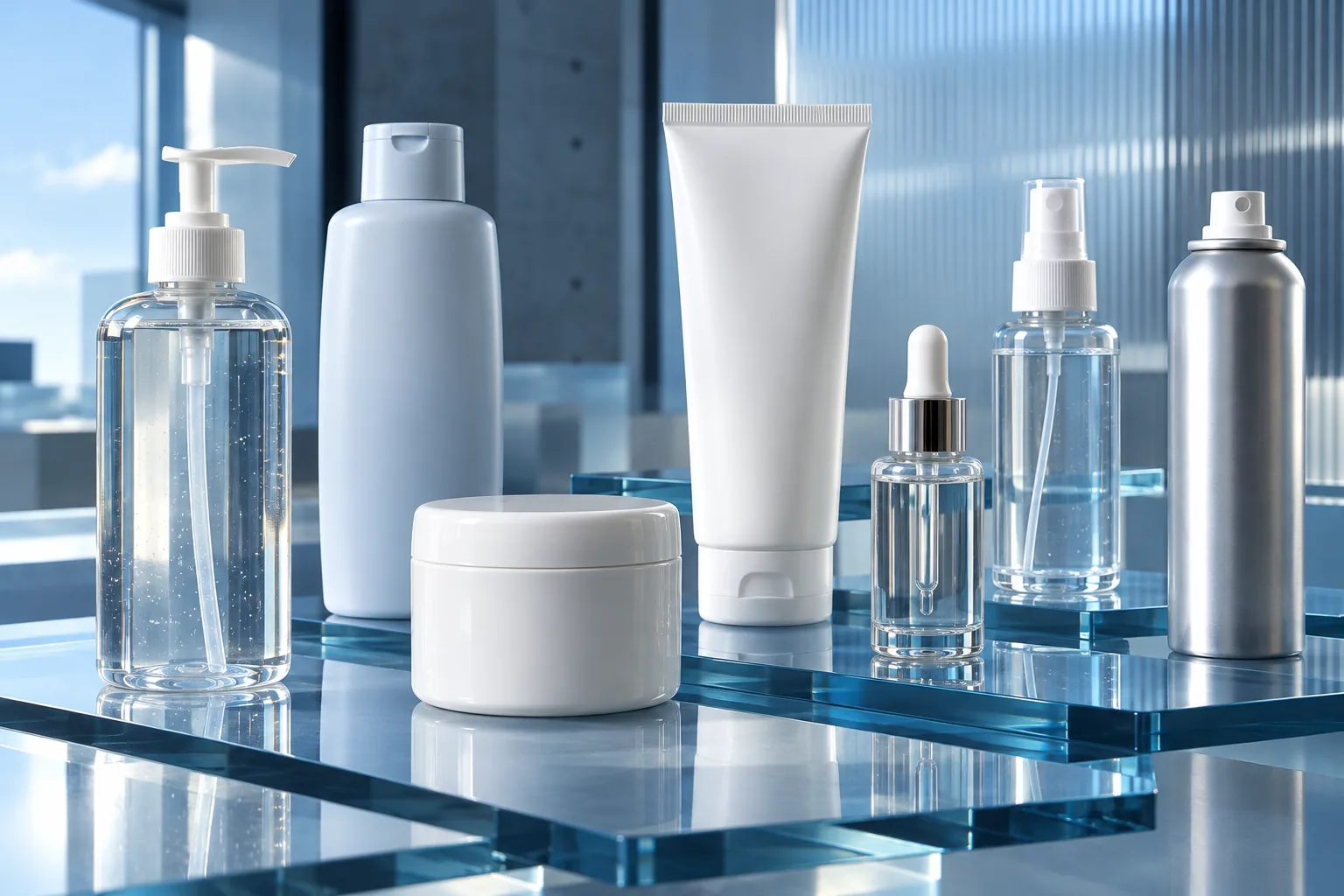
2. Bottles, Tubes, Jars and Sprays: What Fits Each Product?
Shampoo and body wash: the familiar bottle has more options than it seems
A rigid round or oval bottle works well for a liquid shampoo or body wash and offers a generous label panel. A flat-shoulder bottle may stack and ship efficiently, while a sculpted waist provides grip but reduces the easy-to-label area.
A flip-top is compact and convenient for travel. A pump works especially well on a large bathroom bottle. For leak resistance, compare the actual closure seal and locking mechanism with the finished formula.
Example: a refreshing body wash intended for a gym bag may work better in a squeeze bottle with a well-sealing flip-top than a tall, permanently attached pump. The same formula in a large shower bottle may benefit from a pump that can be operated one-handed.
Conditioner: a bottle that works for shampoo may not work for thicker formulas
Conditioners often need more deliberate dispensing. A soft squeeze bottle lets the customer control a thicker cream directly; a tottle (an upside-down bottle resting on its cap) keeps product near the outlet; a lotion pump can work if its passage and output suit the actual formula.
A tottle is a bottle designed to stand on its cap. It keeps thicker product near the opening, which can make the last portion easier to dispense.
A thick conditioner can take six small pump strokes to dispense one useful dose. Compare a higher-output pump with a squeezable tottle and let the dispensing test decide.
Hair masks: jars, tubes and bottles offer genuinely different experiences
A wide-mouth jar is familiar for rich, scoopable masks. It makes texture visible and allows a generous opening, but it also means repeated finger or spatula contact and may use an inner disc or seal. A squeeze tube offers tidy, targeted dispensing and is practical in a shower. A tottle can suit a mask that moves under pressure. A pump may suit selected salon formulas, but only when its delivery system handles the product consistently.
The visual impression is different, too: a short jar with a broad lid looks like an intensive treatment; a slim tube feels quick and practical. Both can be premium when the graphic design is good.
Try this before deciding: dispense the same mask from a jar, a tube and a pump sample with wet hands. Notice grip, mess, dose control and how much product stays inside after normal use. Those observations are easier for a new buyer to understand than a viscosity figure alone.
Serums and sprays: choose the application pattern, not just the bottle
A dropper can place drops of oil or serum onto fingertips or a parting, but the rubber bulb and tube must suit the formula. A precision nozzle lets the user target the scalp more directly. A fine-mist pump is useful when a free-flowing leave-in or body mist should cover a broad area, not form one large puddle. Its spray quality depends on both the liquid and nozzle.
Aerosols deliver products through a pressurized can, valve and actuator. That makes dry shampoo, hairspray and styling mousse behave differently from a finger-operated mist spray. Each format needs a formula designed for its dispensing mechanism.
3. Packaging Materials: What Does Each One Actually Feel Like?
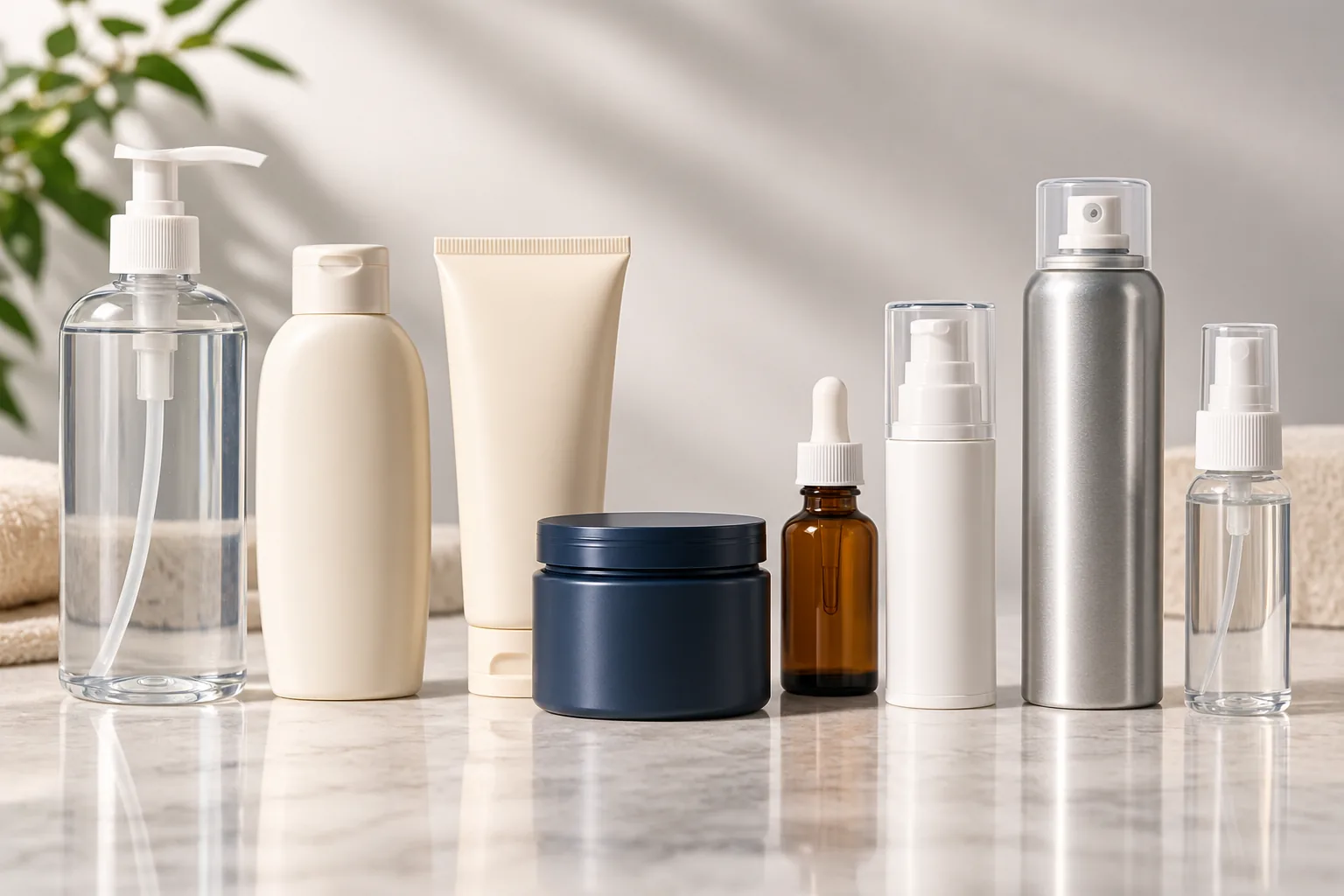
Most shoppers notice transparency, weight, surface finish and squeeze resistance before they ever learn a resin abbreviation. Material names help explain why two similar-looking bottles behave differently.
| Material | What you typically notice | Familiar hair/body care use | Important limit |
|---|---|---|---|
| PET | Clear, glossy, comparatively rigid bottle | Transparent shampoo and body wash | Heat and formula compatibility depend on grade and process |
| HDPE | Often opaque or translucent; robust, slightly yielding | Shampoo, conditioner and body-care bottles | Not the choice for a glass-clear look |
| PP | Light, durable; useful for molded moving parts | Jars, caps, flip-top hinges, pump components | Transparency and stiffness depend on grade/design |
| LDPE / PE tube structures | Soft, easy to squeeze | Hair masks, creams, travel products | Barrier and seal performance depend on tube construction |
| PETG / specialty copolyesters | Clear, glossy; suitable for some intricate shapes | Premium jars, specialty bottles, caps | Not interchangeable with PET; verify recycling and formula fit |
| Glass | Cool, weighty, transparent or frosted | Oils, premium serums | Breakage, weight and bathroom handling |
| Aluminum / tinplate | Opaque metal appearance and excellent shape retention | Qualified aerosol containers, some specialty packs | Internal coatings, seams and corrosion must suit the system |
| Paperboard | Print-friendly, structural presentation | Folding cartons, gift sleeves | Usually an outer pack, not a wet-product primary container |
Three comparisons are especially useful in a packaging meeting.
Choose clear PET when showing the shampoo's color or texture is part of the appeal. Choose HDPE for a tough, often opaque bottle with a softer hand feel. Check the actual sample with any fragrance-heavy or solvent-rich formula before purchase.
PET and PETG can both make transparent containers, but they process and recycle differently. For a premium thick-wall look, request molded samples and resin specifications rather than judging from catalog photographs.
Plastic or glass for a serum? Glass can give a small oil bottle satisfying weight and high perceived value. It is also heavier and easier to break in a tiled bathroom. A clear rigid plastic with good finish and a thoughtful applicator may serve the intended user better.
A frosted or matte look can come from surface treatment, label film or pigments rather than the resin itself. Specify the finish separately from the base material when requesting samples and quotations. [1]
4. Pumps and Closures: Small Parts That Change the Whole Experience
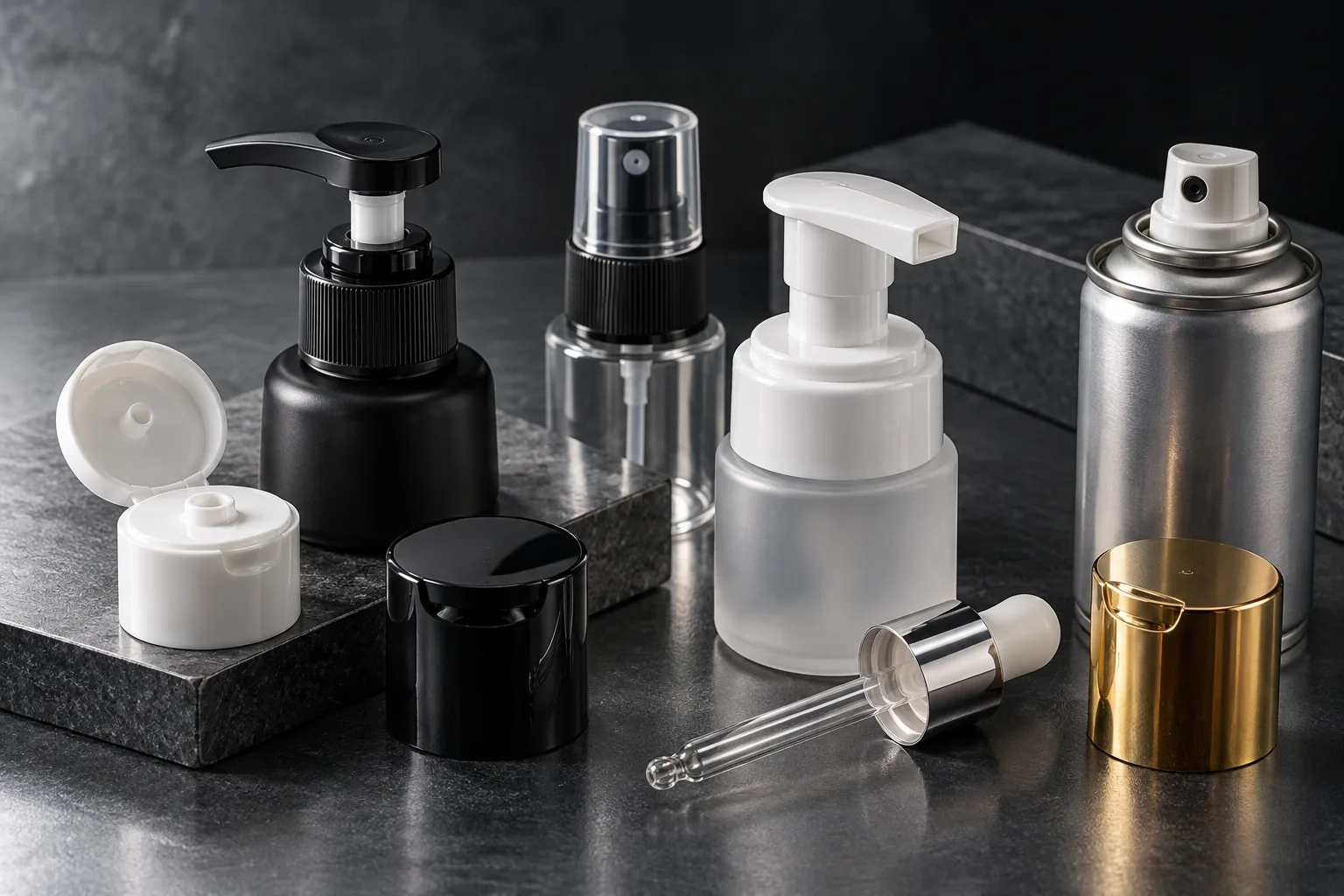
A 28/410 bottle neck tells you which closures can attach; it does not tell you how much product a pump delivers. Check output per stroke, dip-tube length and formula compatibility on the assembled pack.
Flip-top and disc-top: convenient, but not the same opening
A flip-top opens on a hinge and usually gives a straightforward orifice for squeezing or pouring. A disc-top opens when one side of its top disc is pressed, exposing the dispensing hole on the other side. Both can be convenient for shampoo and conditioner; an opening that works for a thin body wash may feel slow or messy with a cream.
Lotion pump: the bathroom workhorse
A standard lotion pump uses repeated manual strokes to draw product through an internal pumping mechanism and out of a spout. It can be a good choice for shampoos, hand washes and selected conditioners. Ask about output per stroke , priming (the first strokes needed before product comes out), locking and the force required to press it .
Example: a customer may prefer two easy strokes of conditioner to six frustrating small strokes. The right answer might be a different output pump, not a redesign of the entire bottle.
Foam pump: liquid in, foam out
A non-pressurized foam pump blends a suitable liquid formula with air and sends it through a mesh or mixing element. It is common in foaming hand wash and face cleansers. It does not take an ordinary thick shampoo and magically turn it into mousse; the formula must be developed for foam-pump delivery. This differs from pressurized styling mousse. [ 2]
Fine-mist sprayer, treatment pump and dropper
Fine-mist pumps spread low-viscosity products across a wider area, while scalp applicator tips target a parting or a small treatment zone. For a treatment pump, ask the supplier for output per stroke and the intended viscosity range.
Airless packaging: a structure, not a magic claim
Airless systems commonly use a rising piston or collapsing inner bag to limit air entering the product chamber during dispensing. They are useful for selected serums and creams, but the formula still needs suitable preservation and compatibility testing. [3]
A useful supplier question: “Can you show the actual output and evacuation performance with our finished formula?” It is more useful than asking only whether the package is airless.
5. Labels, Printing and Finishes: One Bottle Can Look Like Four Brands
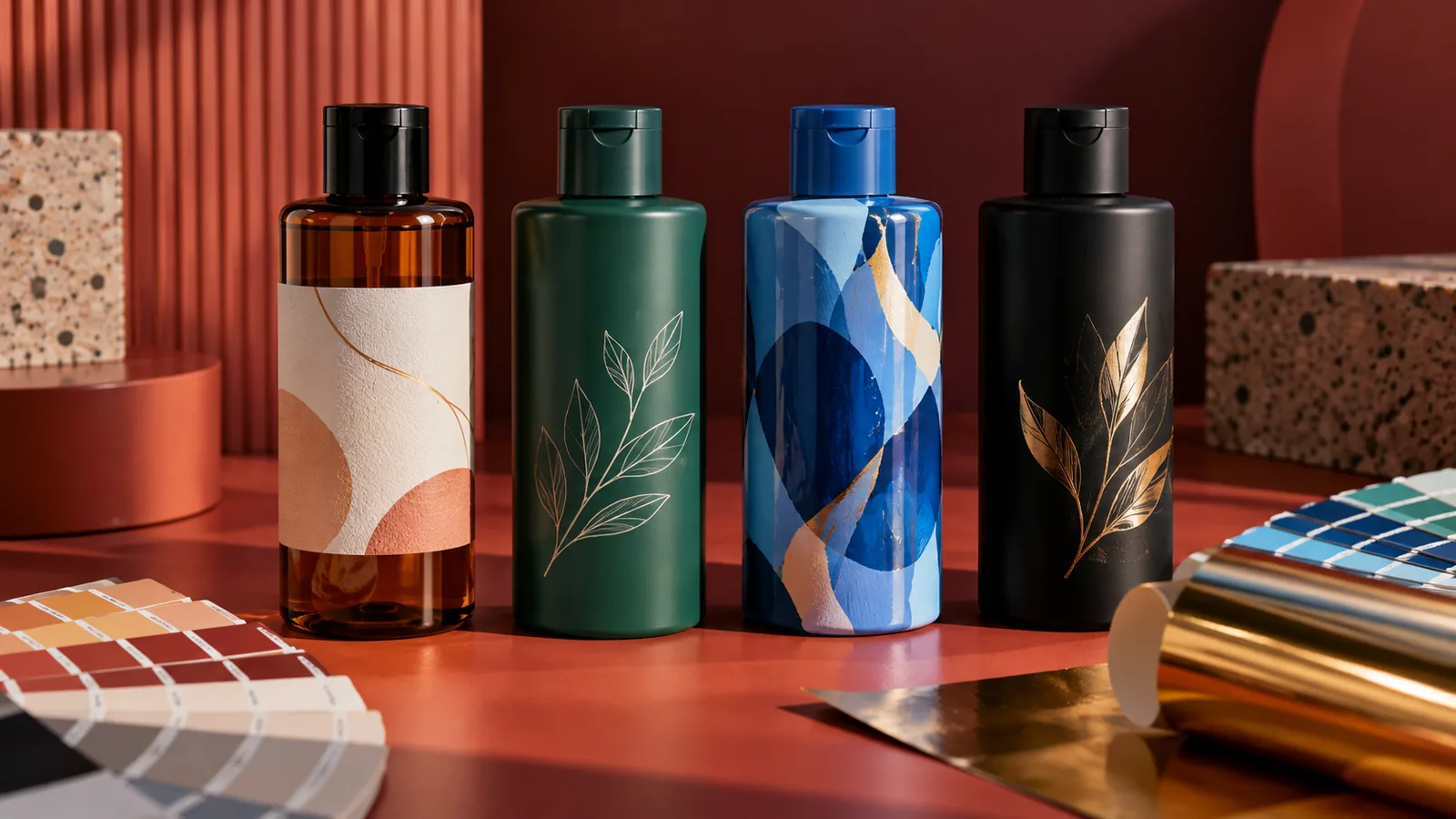
Take one plain white shampoo bottle. Give it a bright paper-look sticker and it feels fresh and accessible; print directly on the bottle and it becomes minimal; wrap it in a full-body sleeve and almost every surface becomes artwork; add a small metallic accent and the look changes again. The bottle mold has not changed at all.
Pressure-sensitive labels: flexible designs without changing the bottle
A pressure-sensitive label is a preprinted adhesive label applied to a finished container. It can carry full-color artwork, multiple languages, textured finishes or different versions across a shampoo collection. This is often a sensible route when a brand wants to explore several SKUs without committing every visual change to the bottle mold.
Where it can go wrong: a highly tapered or sharply curved bottle may wrinkle a flat label; a poor adhesive or laminate may lift after time in a wet shower. Choose the bottle's label panel before designing a rectangular layout.
Direct screen printing: clean look, fewer visible layers
Screen printing places ink directly onto a bottle for a clean, label-free appearance. The number of colors, print area and registration precision affect both setup and unit cost, so it works particularly well when the artwork is stable across repeat orders.
Shrink sleeves: wrap around curves, then shrink to fit
A shrink sleeve is a printed film applied around a bottle and shrunk with heat. It offers near-360° branding and can cover shaped bottles that are difficult to label with a flat sticker. The trade-off is artwork distortion around the shoulders and waist: text and logos may require pre-distortion to look correct after shrinking. Not all films, labels or finishes behave equally in recycling processes. [ 4] [ 5]
Hot stamping, spray coating and metallized effects
Hot stamping adds metallic or pigmented foil accents, often on a logo or short detail rather than every line of text. Spray coating can create a matte, satin, soft-touch or colored surface, depending on the process and substrate. Metallized-looking parts may come from vacuum metallization or decorative coatings, while a colored plastic bottle can instead be produced with pigment in the resin. These approaches do not have identical appearance, scratch resistance or costs.
For a six-product curl-care collection, matte black stock bottles with six coordinated film labels are a practical way to launch without custom molds. Once a high-volume hero SKU is established, direct printing becomes more attractive because repeated setup costs are spread across larger runs.
6. How to Make Different Containers Look Like One Product Family
A complete range does not need identical bottle shapes. What needs to repeat is a clear visual system .
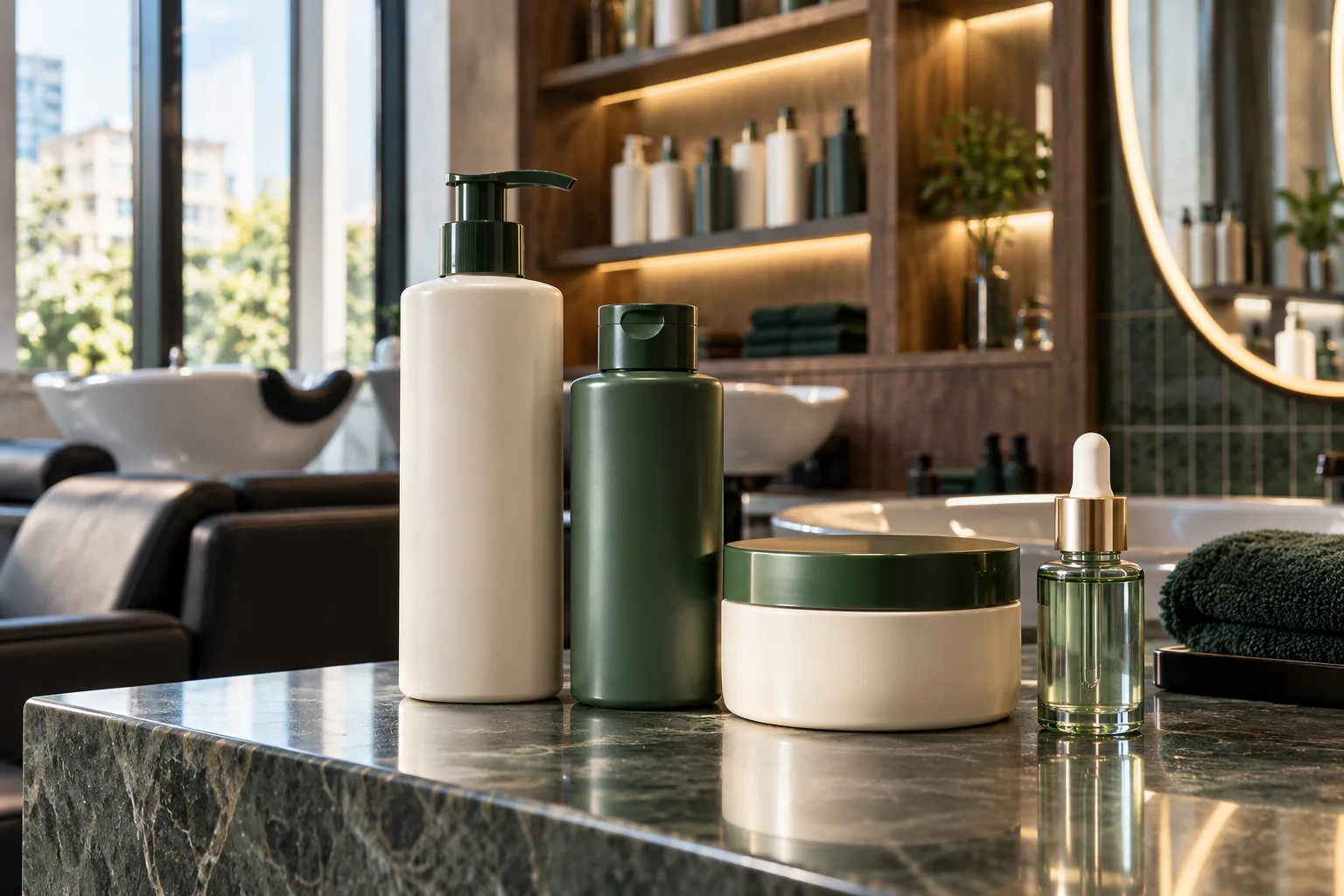
Start by keeping the brand mark, series name and product-type text in predictable positions. Use a consistent type family and decide which information should be read first from a shelf or thumbnail. Choose one shared visual anchor—perhaps a deep green field, a narrow colored stripe or an oversized series name—then allow the individual products to use different dispensing structures.
Consider a four-product scalp-care set:
| Product | Practical packaging idea | Visual consistency cue |
|---|---|---|
| Balancing Shampoo | Tall bottle with lotion pump | Main green label field and large product name |
| Daily Conditioner | Squeezable tottle | Same field, typography and position of key benefit |
| Scalp Mask | Short wide-mouth jar | Same brand system on the lid and front panel |
| Scalp Serum | Smaller applicator bottle with precision tip | Same color family, simplified text for the smaller area |
That family is unified, but nobody has tried to make a jar into a shampoo bottle. Buyers should also test the smallest artwork on a mobile product thumbnail: if consumers cannot tell shampoo from conditioner, elegant typography has failed a basic job.
A useful design sequence is to make one hero product first, approve its hierarchy, and then adapt—not simply scale—the design to each pack. A small serum bottle needs less front-panel copy than a broad shampoo bottle. Long INCI lists, warnings and responsible-party information belong in the legally appropriate places and may differ by market; visual minimalism does not remove labeling obligations.
7. What Actually Changes Packaging Cost and MOQ?
The most helpful comparison is not “cheap plastic versus expensive glass.” It is how much of the packaging system must be customized .
Level A — Stock container + custom label. Choose existing bottles, jars or tubes with compatible stock closures, then personalize the artwork. This is the fastest route for testing a new collection and keeping several SKUs visually consistent.
Level B — Stock mold + custom color or decoration. Keep an established shape but request a specific resin color, surface finish, direct print or metallic detail. This creates more control over appearance, though bottle production, coating and decoration may have separate minimum quantities and lead times.
Level C — New custom mold and components. Develop a unique silhouette or closure. This may improve differentiation, but it introduces tooling cost, dimensional engineering, sample revisions and higher commitment. A new bottle design also needs a matching cap or pump, not just an attractive rendering.
Three costs often surprise new buyers: bottles and pumps can have different purchase minimums; printers charge for setup and version changes; and packaging leftovers tie up working capital. Ask for separate quotes for bottle, closure, printing, assembly and shipping carton. For a numerical cost breakdown, see the dedicated Shampoo Manufacturing Cost guide.
8. Before You Approve the Design, Try the Actual Package
A beautiful mock-up is still a picture. Before ordering a production run, request physical samples with the intended formula and the actual closure, label and carton configuration.
Use a short practical check:
- Fill it: can the filling and capping equipment handle the bottle shape, neck and contents?
- Dispense it: can customers use the product at the desired dose, including when the pack is nearly empty?
- Wet it: does the label grip, ink or finish remain acceptable in the shower or bathroom?
- Store it: does the real formula change the pack, seals or decoration over time?
- Ship it: do the assembled unit and its outer packaging protect against the intended handling and route?
- Read it: are product names, key information and required market labels legible on the finished article?
Before production, test the actual filled pack for dispensing, shower exposure, storage and shipping. Our Cosmetic Product Testing guide explains the formal methods; the Regulatory Compliance guide covers destination-market labeling duties.
A Quick Example: Build a Hair-Care Set Without Making Every Pack Identical
Suppose a brand wants four products with a clean white-and-sage look. The shampoo could use a tall PET or HDPE bottle with a suitable pump; the conditioner a shorter PE tottle; the mask a PP jar; and the serum a smaller rigid bottle with a precision applicator. The exact resin and closure are confirmed with actual formula samples, not chosen from these generic examples alone.
Use the same sage accent, logo treatment and typography across all four. Give shampoo and conditioner clear, different product names; leave space for the jar's lid graphics; avoid shrinking the serum's entire label layout until it becomes unreadable. Now test the real dispensers and choose a decoration system that the supplier can reproduce across different shapes.
The result is one recognizable collection with four containers chosen for four different jobs: a pump for shampoo, a squeeze bottle for conditioner, a wide-mouth mask jar and a precision applicator for scalp serum.
Frequently Asked Questions
Is PET or HDPE better for shampoo bottles? PET is a common choice for a clear, rigid look; HDPE is often used for opaque, tough bottles. Choose by the desired appearance and physical requirements, then check the exact packaging grade against the formula and closure.
Can I use the same bottle for shampoo and conditioner? Often yes, but the conditioner may need a different cap or pump output. Compare dispensing before deciding the packages are interchangeable.
Are sticker labels less premium than direct printing? No. High-quality film labels with good artwork and finishing can look excellent. Direct printing gives a different aesthetic, not an automatic quality ranking.
Can a foam pump package ordinary shampoo? A foam pump generally needs a compatible, usually lower-viscosity liquid formulated for the pump. It should not be assumed to work with conventional thick shampoo.
Does airless packaging mean my product needs no preservative? No. Preservation and product safety depend on the complete formula, manufacturing process, packaging and intended use.
Do I need a custom mold to create a distinctive range? Not necessarily. Stock containers with cohesive labels, finishes and carefully matched closures can create a recognizable brand family.
The Bottom Line
Good hair and body care packaging design brings together what the product is, how it leaves the pack and what the customer sees . Bottles, jars, tubes, pumps and labels are not separate catalog choices. They work together, but they do not need to be complicated. Start with a recognizable use case, compare a small number of real samples and let visual design connect the different formats.