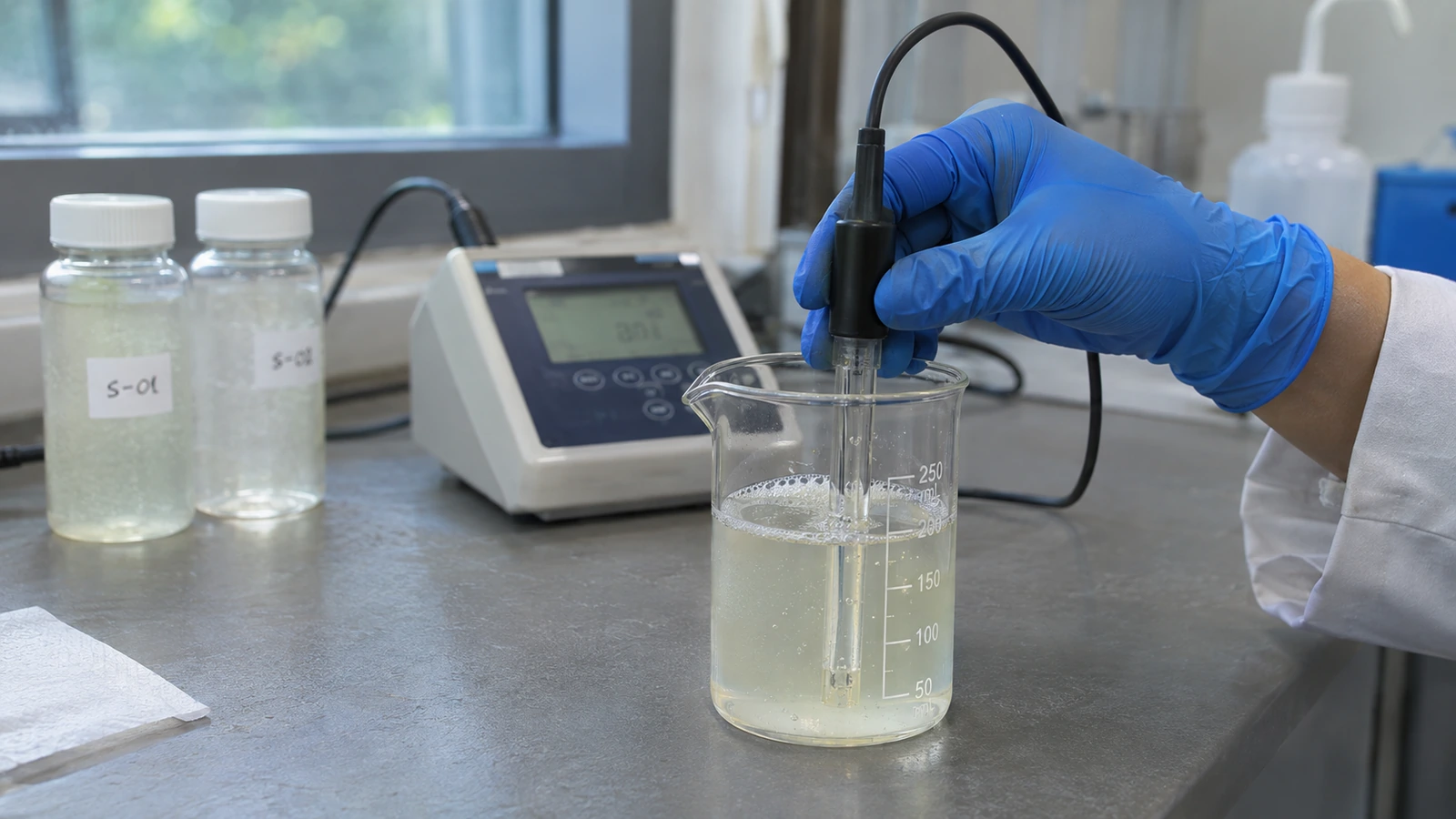
Why does cosmetic product testing have to go beyond ingredient safety? Because a cosmetic product can fail in far more ways than a formula alone can predict. A preservative system that passes every check on day one can fail after three months of consumer use. An emulsion that is perfectly stable in the laboratory can separate inside its own bottle. A seal that held on the production line can leak after two weeks at sea. And a marketing claim that sounded reasonable in a brainstorm can stall a product registration if it is not supported by evidence.
Cosmetic product testing is the process of building that evidence. Taken together, the tests described in this guide answer five practical questions: Is the product safe to use? Will it stay stable and effective through its shelf life? Does it survive its own packaging? Does it survive the journey to the consumer? And can every claim printed on the label be proven?
Cosmetic Product Testing at a Glance
| Testing Area | What It Answers | Typical Tests / References | What the Result Changes |
|---|---|---|---|
| Microbiological Testing | Is the product microbiologically safe now and during use? | ISO 17516 · ISO 11930 PET · ISO 29621 | Preservative system · formula · launch timing |
| Physicochemical & Safety | Does the product contain what it should — and nothing it should not? | Heavy metals · restricted substances · process contaminants · ICP-MS / GC-MS / LC-MS/MS | Raw materials · suppliers · safety dossier |
| Stability & Compatibility | Will the formula and package remain stable through shelf life? | Accelerated / long-term stability · freeze-thaw · light · compatibility | Shelf life · packaging · formulation |
| Packaging & Transport | Can the finished pack survive dispensing and distribution? | Leak · torque · pump / valve · vibration · drop · compression | Pack design · closure · shipping configuration |
| Efficacy & Claims | Can label and marketing claims be supported? | Corneometry · instrumental imaging · human studies · ISO 24444 / 24443 | Claims · marketing evidence · dossier |
| Regulatory & Documentation | Is the evidence assembled correctly for the market? | PIF / CPSR · MoCRA · NMPA · GMP documentation | Notification · registration · market access |
This guide covers six connected areas of cosmetic testing: microbiological quality, chemical safety, stability, packaging performance, efficacy evidence and regulatory documentation. Read them as parts of one development plan, not as six unrelated laboratory orders.
1. Microbiological Testing
1.1 What it is for
Water-based cosmetics are especially exposed to microbial contamination during manufacturing and use. Microbiological testing answers two essential questions: is the finished product clean at release, and can its preservation system protect it through ordinary consumer use?
1.2 What it commonly includes
Routine microbial limits testing. The baseline panel for finished products typically covers:
- Total Aerobic Microbial Count (TAMC)
- Total Combined Yeasts and Moulds Count (TYMC)
- Specified pathogens, screened when the product type warrants it — commonly Staphylococcus aureus, Pseudomonas aeruginosa, Candida albicans, and Escherichia coli (or bile-tolerant Gram-negative bacteria, depending on the pharmacopoeial framework)
ISO 17516 sets microbial limits for finished cosmetics, with stricter limits for products used around the eyes, on mucous membranes or by children under three. The standard provides a practical reference for setting microbiological acceptance criteria.
As a practical reference, ISO 17516 sets a maximum total aerobic mesophilic microorganism count of 1 × 10² CFU/g or mL for products intended for children under three years of age, the eye area, or mucous membranes, and 1 × 10³ CFU/g or mL for other cosmetic products. Specified microorganisms including E. coli, P. aeruginosa, S. aureus, and C. albicans should be absent in 1 g or 1 mL of product.
Preservative efficacy testing (PET). Microbial limits testing is a snapshot; PET — often called challenge testing — tests the future. The product is deliberately inoculated with standardized challenge organisms (including P. aeruginosa, S. aureus, E. coli, C. albicans, and Aspergillus brasiliensis), and surviving counts are measured at intervals over 28 days. For cosmetics, ISO 11930 is a key reference method for evaluating antimicrobial protection. Other established frameworks, including USP <51> Antimicrobial Effectiveness Testing and Ph. Eur. 5.1.3 Efficacy of Antimicrobial Preservation, may also be used depending on the product and regulatory context.

Water activity and risk-based classification. ISO 29621 uses a documented risk assessment to identify finished products with a low risk of microbial contamination during manufacture or intended use. Common indicators include:
Typical ISO 29621 low-risk indicators
| Factor | Typical threshold / condition | Example or note |
|---|---|---|
| pH | ≤ 3.0 or ≥ 10.0 | Acid peels; hair relaxers |
| Anhydrous system | No water phase | Body oils; pencils |
| Alcohol | ≥ 20% | Hair sprays; tonics; perfumes |
| Water activity (aw) | ≤ 0.75 | Low available water for microbial growth |
| Filling temperature | ≥ 65°C | Process factor assessed with the finished product system |
| Solvent / alkaline / oxidizing systems | Ethyl or butyl acetate >10%; ammonia ≥0.5%; monoethanolamine ≥1%; H₂O₂ ≥3% | Nail enamels; hair dyes; bleaching or perm products |
| Aluminium chlorohydrate and related salts | ≥ 25% | Antiperspirants |
| Protective packaging | Prevents microbial ingress during intended use | Risk depends on package design and use pattern |
These factors help identify low-microbiological-risk products; none is a standalone exemption. Document the assessment of the finished formula and package before reducing the microbial testing program.
1.3 When it matters most
Water-based shampoos, conditioners and creams generally need microbiological assessment. Extra care is warranted for products used around the eyes, for young children and at other sensitive application sites. The preservation system must both control contamination and suit the intended formulation and use.
1.4 How the test conditions are determined
Consider water activity, product chemistry, the user and the container. An open jar is repeatedly exposed to fingers and the surrounding environment, while a well-designed closed pump limits direct user contact with the bulk product.
1.5 How it affects launch
Run preservative efficacy testing early. A failure can require changes to the preservative system, formula or packaging—and may trigger repeat testing of the affected work. Finding the problem before the final stability program saves time and rework.
2. Physicochemical & Safety Testing
2.1 What it is for
Physicochemical and chemical-safety testing checks whether the product meets its quality specifications and whether relevant impurities, contaminants or restricted substances are controlled. Routine checks measure properties such as pH and viscosity; targeted analytical testing addresses risks identified from the ingredients, process and product category.
2.2 What it commonly includes
Heavy metals and elemental impurities. Lead, arsenic, cadmium, and mercury are routinely considered in cosmetic impurity risk assessments. Acceptance criteria are market- and product-specific. In the EU, prohibited substances are not governed by a single general set of finished-product ppm limits; technically unavoidable traces may be permitted under Article 17 of Regulation (EC) No 1223/2009, provided they result from sources such as raw-material impurities, manufacturing, storage, or packaging migration and the finished product remains safe. Trace-level analysis is commonly performed using techniques such as inductively coupled plasma mass spectrometry (ICP-MS) with microwave digestion sample preparation.
Banned and restricted substance screening. Regulatory annexes — the EU’s Annexes II–VI, China’s corresponding tables, ASEAN’s ingredient lists — define thousands of prohibited and restricted substances. In practice, screening programs focus on the classes that carry real risk:
- Preservatives — e.g., formaldehyde releasers and isothiazolinones; in the EU, the MCI/MI mixture and MI are restricted under Annex V entries 39 and 57 respectively
- UV filters — only positively listed filters, at listed concentrations
- Colorants — positive-list only, with hair dye intermediates and azo dyes drawing specific attention
- Hormones and glucocorticoids — zero-tolerance adulterants, screened by liquid chromatography–tandem mass spectrometry (LC-MS/MS) in products with “whitening” or “anti-inflammatory” positioning
- Antibiotics — screened in acne and anti-blemish products
Process-derived risk materials. Some contaminants enter during manufacturing rather than formulation: 1,4-dioxane (a trace byproduct of ethoxylation, monitored by gas chromatography–mass spectrometry (GC-MS)), asbestos in talc (confirmed by polarized light microscopy / transmission electron microscopy (PLM/TEM) morphology analysis, not elemental screening alone), free formaldehyde (distinct from formaldehyde releasers), and methanol (critical for ethanol-based products such as perfumery and hand sprays).
2.3 When it matters most, and how conditions are set
Build the analytical panel around the formula and its raw-material risks. A standard panel may miss a product-specific concern, while unnecessary tests add expense without improving quality decisions.
2.4 How it affects launch
Safety data feeds directly into the safety reports and dossiers discussed in Section 6. A contaminant finding late in development can force raw-material or supplier changes, so this pillar should run in parallel with formulation work rather than after it.
3. Stability & Compatibility Testing
3.1 What it is for
A formulation is not finished when it passes release specifications — it is finished when it stays within specifications. Cosmetic stability testing generates the evidence that a product maintains its identity, quality, and performance throughout its labeled shelf life. Compatibility testing extends the same question to the formula–package system as a whole, because the container is not a neutral holder: it is an active part of the product.
3.2 What it commonly includes
ISO/TR 18811 is a cosmetic-specific reference for designing stability studies. Laboratories use accelerated, long-term, cycling and light-exposure tests to identify likely failure modes before market launch.
Test article representativeness. Development samples can be used for preliminary screening, and pilot batches may be acceptable where the manufacturing process is considered equivalent. Evidence used to support the marketed product should represent the final formula, manufacturing process, and intended primary packaging; material differences should be documented and justified, and the report should identify the sample or batch tested.
- Accelerated testing — a commonly used example condition is 40°C / 75% RH for around 3 months; some laboratories use 40°C at ambient RH or 45°C for short-term stress protocols
- Long-term testing — often at room-temperature reference conditions, with pull points extending through the intended shelf life. Real-time data, accelerated results and prior knowledge are evaluated together when setting the shelf-life claim.
- Cycling / freeze-thaw — temperature swings (for example −10°C ↔ 25°C, or −5°C ↔ 40°C) stress emulsions and surfactant systems
- Light exposure — for transparent or translucent packaging, following ICH Q1B principles
Typical pull points include 0, 1, 2, 3, 6, 9 and 12 months. Select the temperature, duration and acceptance criteria to stress the actual formula-package system.
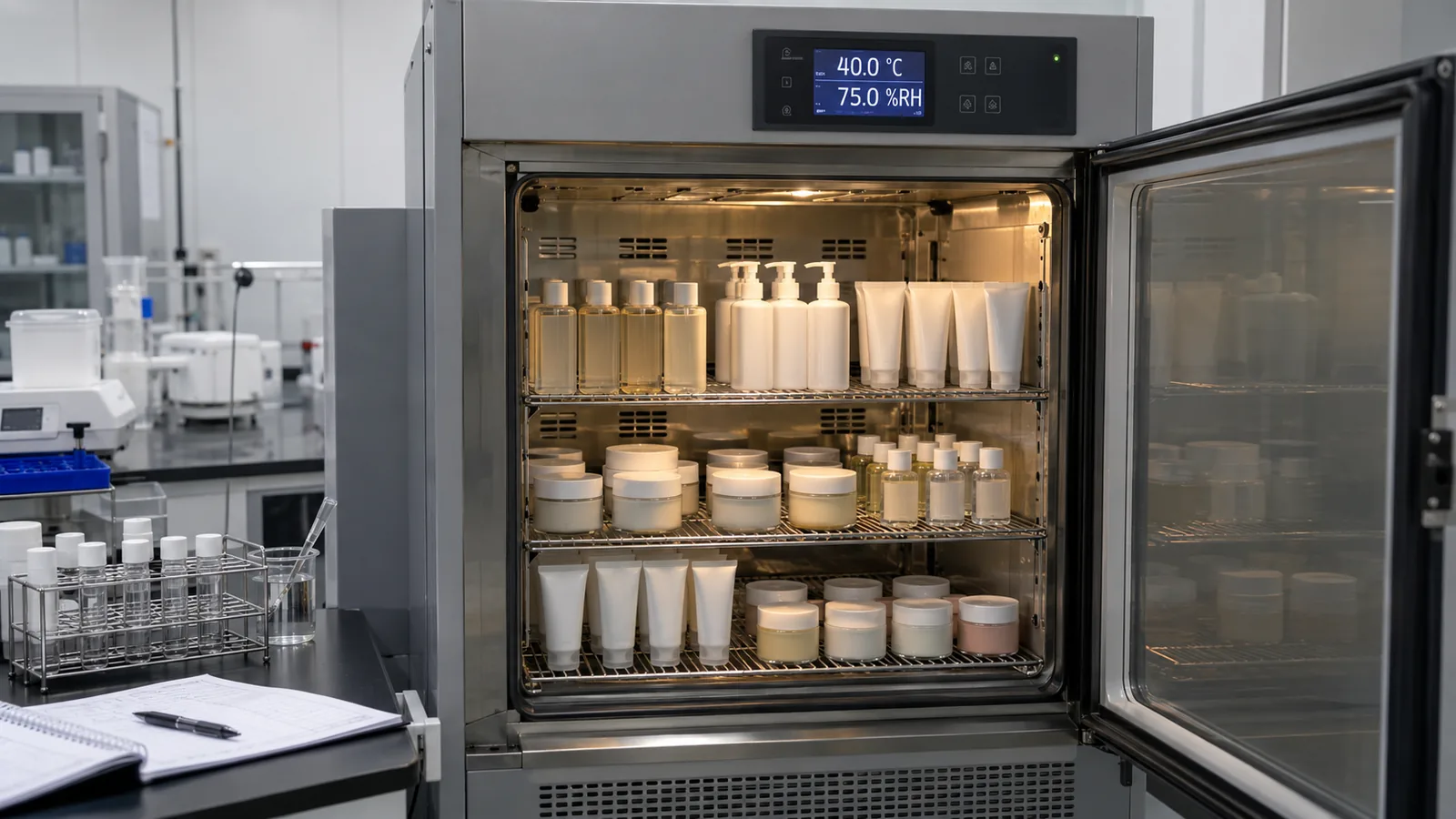
Monitor physical properties (appearance, odor, color, pH, viscosity and phase separation), key chemical properties, microbial quality and dispensing performance. Preservation can also be reassessed on aged samples when the product's risk profile calls for it.
3.3 Formula × packaging compatibility: the two-way street
This is where stability testing becomes genuinely product-specific. Stability testing evaluates the formula; compatibility testing evaluates the formula and the package together — and the interaction runs in both directions:
- Plastic containers can suffer permeation of volatile components, stress cracking, and additive migration into the product
- Glass can leach alkali and shift the product’s pH upward, and certain formulations can cause delamination
- Elastomer components — gaskets, valve seals, pump heads — can swell or harden, changing dose and seal performance
Run compatibility work alongside stability studies with the intended commercial package. A stable bulk formula is not enough if the closure swells, the bottle cracks or the pump stops dispensing.
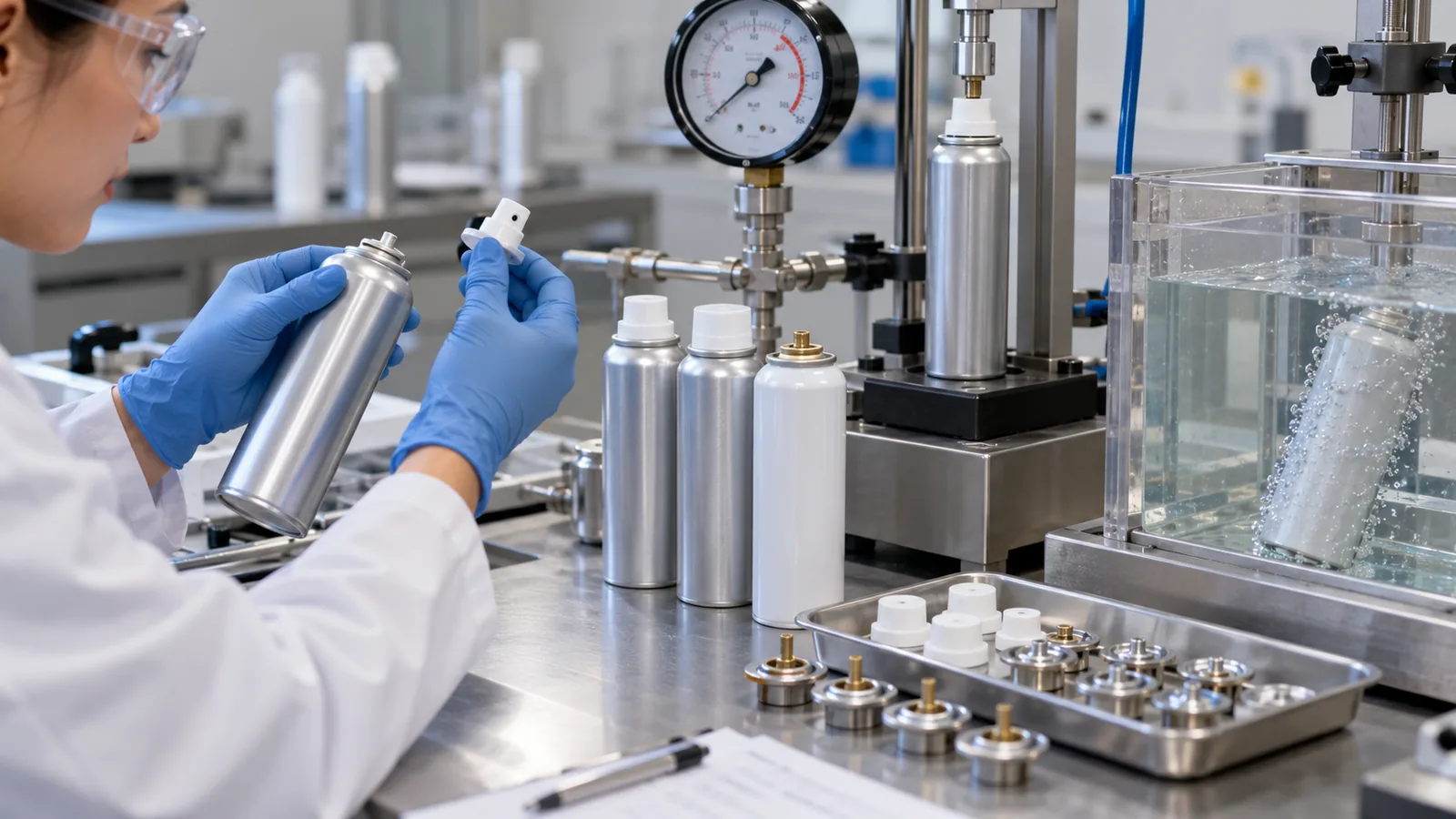
Metal packaging adds its own failure mode: internal corrosion. A water-based or ethanol-water formula in direct contact with bare metal can initiate pitting or uniform corrosion, and in pressurized containers the consequences go beyond appearance — pinhole leaks release propellant and reduce pressure. A competent compatibility program for metal packaging covers lacquer/coating integrity on empty containers, accelerated corrosion exposure of filled packs, and — for pressurized systems — weight-loss and pressure-decay tracking, since leakage is a compatibility endpoint in itself.
3.4 When it matters most, and how conditions are set
Every product with a shelf-life claim needs stability data, but the stress conditions are chosen per product: an oil-based anhydrous balm and a water-based spray face different risks and different protocols. The claimed shelf life, the packaging material, the climate of the target market, and the distribution chain (does the product sit in an unairconditioned warehouse or a refrigerated shop?) all shape the design.
Period after opening (PAO). In the EU, products with a minimum durability of more than 30 months generally require a PAO indication where the concept is relevant. PAO justification should consider stability, antimicrobial protection, packaging, and foreseeable use; in-use simulation may be added where repeated opening or user contact materially changes risk.
3.5 How it affects launch
Late packaging failures are expensive: replacing a bottle or closure may require fresh compatibility, stability or transport evidence. Approve the formula and primary pack together, early in development.
Post-launch testing and change triggers. Testing should be reconsidered when a material change affects the formula or preservative system, raw-material supplier or specification, fragrance or solvent system, primary packaging or closure, manufacturing process, or key claim. The scope should be risk-based: a change does not automatically require the entire test program to be repeated.
4. Packaging Performance & Transport Testing
4.1 What it is for
Packaging and shipping failures can ruin an otherwise successful cosmetic product. Leaking closures, seized pumps and crushed cartons create returns, claims and retailer rejections. Test the assembled selling unit against the handling and distribution conditions it will actually face.
4.2 What it commonly includes
Seal and closure integrity:
- Leak testing — vacuum decay, pressure decay, or dye penetration for liquid products
- Torque retention — initial application torque versus retention after transit, for screw closures
- Pump and sprayer function — actuation count, dose consistency, lock-down integrity
Mechanical and transit simulation:
- Drop testing — packaged product dropped from defined heights onto specified surfaces
- Compression / stacking — static load simulating warehouse storage
- Distribution simulation — ISTA 2A/3A or ASTM D4169 sequences combining vibration, shock, compression, and atmospheric conditioning to model real logistics: sea freight, air freight, and parcel last-mile delivery
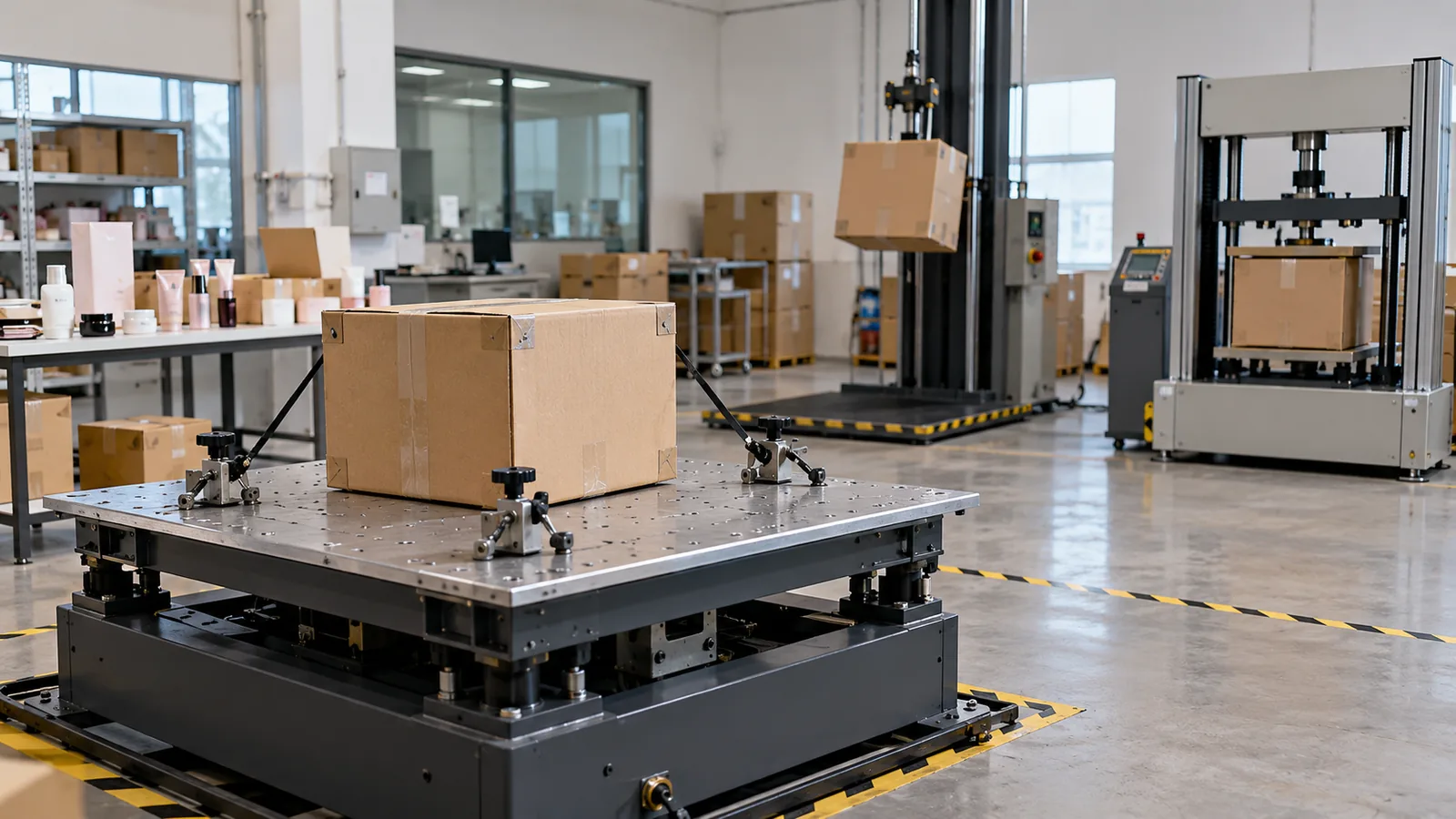
For context, ISTA 2A applies to individually packaged products up to 68 kg (150 lb), while ISTA 3A covers parcel-delivery packaged products up to 70 kg (150 lb); the correct procedure depends on the actual distribution system.
A pressurized aerosol product illustrates how naturally these tests combine. Alongside the standard seal-integrity and transit checks, its packaging program must also cover valve and actuator compatibility (gaskets and springs must tolerate both the formula and the propellant system), leak rate and pressure behavior over time, and internal corrosion of the can. These are not exotic extras — they are the packaging-performance tests that this product format happens to require. The same logic applies, in milder form, to any dispensing system: a formulation that passes every chemical assay can still fail commercially if the pump sticks after three months on shelf.
Dangerous-goods classification. For transport classification, aerosol flammability may also need to be assessed under the UN Manual of Tests and Criteria. Spray aerosols use ignition-distance testing and, where applicable, enclosed-space ignition testing; foam, mousse, gel, or paste aerosols follow the relevant foam-flammability route to support the correct Division 2.1 or 2.2 classification.
4.3 When it matters most, and how conditions are set
Choose the transport simulation to match the route: palletized sea freight, parcel delivery and air freight stress packages in different ways. ISTA and ASTM D4169 offer established test sequences.
4.4 How it affects launch
A failed transport trial is cheaper to fix than a rejected shipment. Use the results to improve carton strength, dividers, closures and pallet configuration before production scales.
5. Efficacy & Claims Testing
5.1 What it is for
Modern cosmetic regulation has converged on a single principle: if you claim it, you must prove it. Efficacy and claim substantiation testing connects the marketing language on the label to verifiable evidence, protecting both the consumer and the brand.
5.2 What it commonly includes
The EU's Regulation (EU) No 655/2013 sets common principles for cosmetic claims, including truthfulness and evidential support. Match the strength of each claim to appropriate evidence: existing literature, validated data, instrumental testing or well-designed consumer and human studies. The PIF should contain the claim-support information relevant to the marketed product.
| Claim | Common method | Standard / basis |
|---|---|---|
| SPF | In vivo human | ISO 24444 |
| UVA protection | In vitro | ISO 24443 (UVA-PF) |
| Moisturization | Corneometry | Industry-standard instrumental testing |
| Anti-wrinkle / firming | Instrumental (cutometry, profilometry) + image analysis | Custom-designed studies |
| Exfoliation | pH, cell-turnover markers, corneometer kinetics | Study-specific |
| Skin compatibility / sensitization support | Patch testing or human repeat insult patch testing (HRIPT), where appropriate | Custom-designed studies; “hypoallergenic” is market-specific |
Sunscreen market note. ISO 24444 and ISO 24443 are useful international methods, but sunscreen market access is not globally uniform. In the United States, sunscreens follow the OTC drug framework under FDA OTC Monograph M020 and related 21 CFR 201.327 testing and labeling requirements; Broad Spectrum qualification uses a critical wavelength of at least 370 nm, and water-resistance claims are limited to 40 or 80 minutes when supported by the required testing. In the EU, Commission Recommendation 2006/647/EC recommends UVA protection of at least one-third of the labelled SPF and a critical wavelength of at least 370 nm.
5.3 Instrumental versus human studies
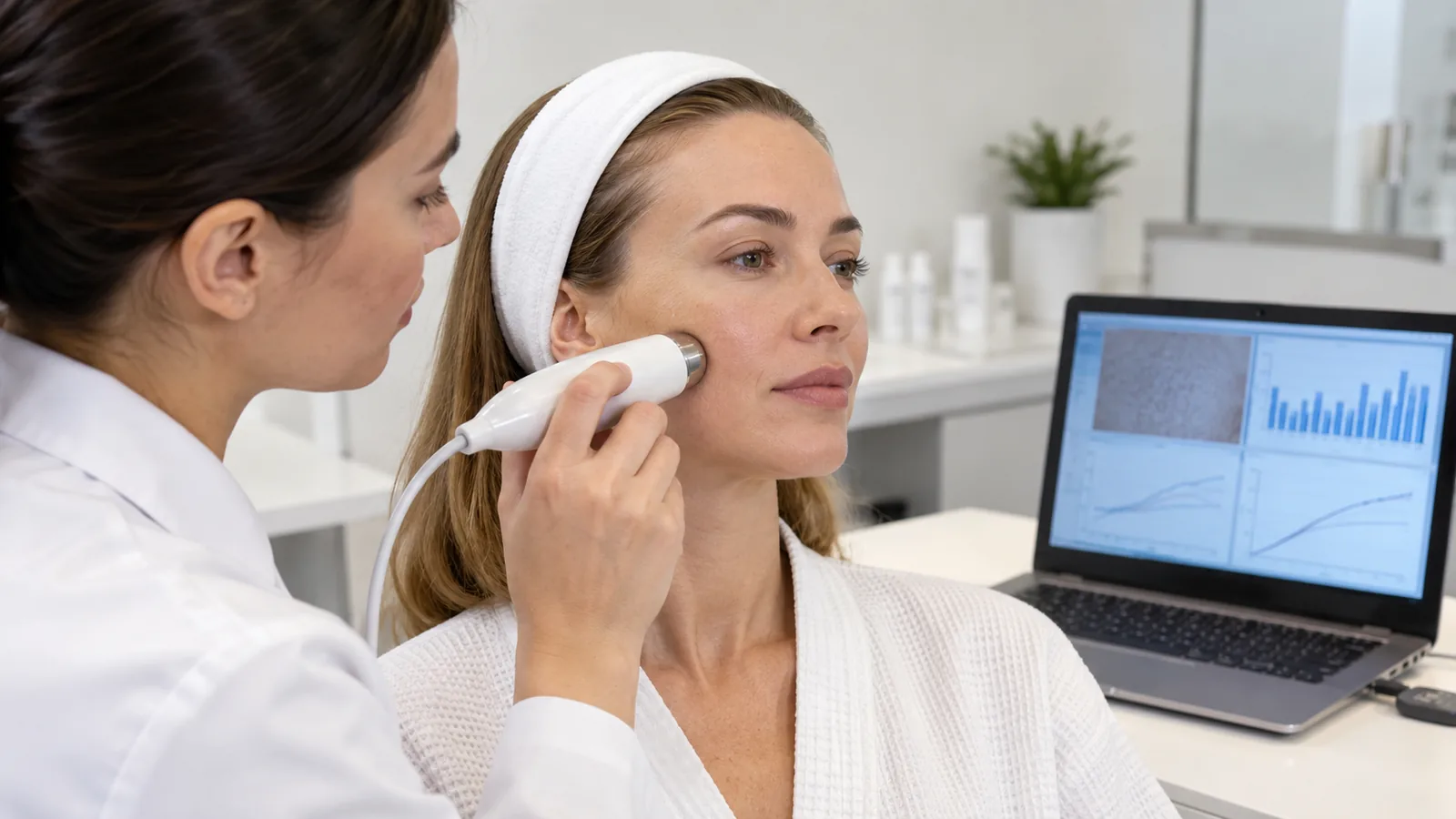
Instrumental methods (such as corneometry, TEWL and sebum measurements) help quantify product performance. Human studies add direct evidence of consumer outcomes. In China, claims such as whitening, sunscreen, anti-hair loss, acne removal, nourishing and repairing generally require human efficacy evaluation; where nourishing or repairing claims concern only hair, testing on excised real hair can be used under the stated conditions of the efficacy-claim rules. Whitening, sunscreen and anti-hair-loss human studies require the specified qualified testing institutions.
5.4 When it matters most, and how conditions are set
Any product with a functional claim needs substantiation proportionate to that claim — and the study design (panel size, duration, endpoints, instruments) is defined by the claim wording, not the other way around. This is why the claim strategy should be fixed before formulation freeze: retrofitting claims onto a finished formula that was not designed to demonstrate them is one of the most expensive mistakes in product development.
5.5 How it affects launch
Claim support is a launch requirement. Set claims early, identify the evidence needed for each one, and keep the substantiation aligned with the formula that will be sold.
Typical Test Planning Windows
Use these time windows to schedule development work. Run independent studies in parallel where possible; build the final release plan around laboratory capacity and the tests the product actually needs.
| Test / program | Typical planning window and dependency |
|---|---|
| PET / challenge testing | 28-day study; allow about 4–6 weeks including setup and reporting. Start once the formula and preservative system are reasonably fixed. |
| Accelerated stability | Around 3 months in a common program. Can run in parallel once the formula and primary packaging are sufficiently defined. |
| Long-term stability | 12 months is commonly used as part of shelf-life support and can continue while commercialization proceeds. |
| Packaging / transport | Often days to about 2 weeks, depending on the laboratory and protocol. Run after the final pack-out and shipping configuration are defined. |
| Human efficacy / claims | Claim-specific and often several weeks or longer. Start after the formula and claim wording are sufficiently fixed. |
6. Regulatory & Documentation
6.1 What it is for
Testing generates the data; documentation delivers it. Cosmetic compliance testing only becomes market access when the results are assembled into the dossier each destination market requires — and the required documents differ by region.
| Market | Registration model | Key documentation | Notable features |
|---|---|---|---|
| EU / UK | Notification (CPNP / SCPN) | CPSR, PIF, GMP per ISO 22716 | Responsible Person required; claims regulated by 655/2013; PIF retained for 10 years after the last batch is placed on the market |
| US | Facility registration + product listing (MoCRA) | Safety substantiation; adverse-event records | No pre-market approval; MoCRA (2022) strengthened FDA authority; facility registration renewed every 2 years; product listing information updated annually |
| China | Filing (general) or registration (sunscreen, whitening, hair dye, etc.) | NMPA filing dossier; efficacy evidence per claim tier | Animal-testing exemptions now possible for certain general cosmetics |
| ASEAN | Notification per member state | Product notification; ingredient compliance per ACD | Harmonized directive; national implementation varies |
| Middle East (GCC) | Registration (e.g., Saudi SFDA) | Free-sale certificates; ingredient review; sometimes GMP audit | Halal certification increasingly relevant |
Test reports support safety and technical decisions; a well-organized dossier makes that evidence usable for assessment, notification and customer review. Decide the destination-market documentation route before commissioning the test program.
Choosing a Testing Laboratory
When comparing testing partners, five questions separate a data vendor from a development partner:
- Is the lab ISO/IEC 17025 accredited — and does the accreditation scope cover your specific methods? A framed certificate means little if your test is not in the scope annex.
- Are the laboratory’s methods, accreditation scope, and reports suitable for your target market and regulatory purpose? Acceptance varies by test, product category, and destination market.
- Can the lab help scope the program? One that asks about your INCI list, packaging, claims, and markets before quoting is adding value; one that sends a generic panel is not.
- Does it see the full picture? Stability, compatibility, preservative efficacy, and packaging performance interact — fragmented testing across three labs often produces reports that do not reconcile.
- What are the timelines, and what happens on failure? A lab that can interpret failed results and suggest reformulation paths is worth more than one that simply returns data.
Reading a Test Report
A report intended to support a dossier or technical decision should clearly identify the sample or batch, method and version, test dates and conditions, results and units, acceptance criterion or conformity statement where applicable, and the issuing laboratory and authorization. Where accreditation is relevant, confirm that the specific method is within the laboratory’s ISO/IEC 17025 scope; measurement uncertainty and photographs should be included where the method, result, or regulatory purpose requires them.
The Bottom Line
A good testing plan answers the questions that can stop a launch: Will the formula stay microbiologically safe? Will it separate or corrode its pack? Will the dispenser work? Can the claims be supported? Resolve those questions early, while changes are still inexpensive.
The strongest development sequence is simple: settle the product concept and claims, evaluate the formula and packaging together, then commission the tests that answer the remaining risks. That approach produces better products and fewer late-stage surprises.
Frequently Asked Questions
Can development or pilot batches be used for testing?
Yes, for preliminary work. For evidence supporting the marketed product, the test article should represent the final formula, manufacturing process, and intended packaging; pilot batches can be acceptable where process equivalence is justified and documented.
When should testing be reconsidered after a product change?
Reassess the program when a change could affect preservation, stability, compatibility, transport performance, or claim support—for example a material formula change, raw-material supplier/specification change, fragrance or solvent change, primary-packaging change, or manufacturing-process change. Retesting should be targeted to the risk created by the change.
Can one testing package support multiple markets?
A shared testing package can support several markets when the formula and marketed pack are the same. Reuse the core stability and safety evidence, then address each market's additional classification, claims and documentation requirements.
Key Standards & Regulatory References
The following are key primary standards and regulatory sources referenced throughout this guide. Standards and regulatory requirements may be revised, so the applicable version should be confirmed before a testing program is finalized. Web-based regulatory sources accessed October 2026.
Microbiology: ISO 17516:2014 · ISO 11930:2019 · ISO 29621:2017
Stability & GMP: ISO/TR 18811:2018 · ISO 22716:2007 · EU CPSR Guidelines 2013/674, §3.2.3
Claims: ISO 24444:2019 · ISO 24443:2021 (Amd 1:2026) · Commission Regulation (EU) No 655/2013 · Commission Recommendation 2006/647/EC · FDA OTC Monograph M020 / 21 CFR 201.327
Market Regulation: Regulation (EC) No 1223/2009 (Arts. 11, 17, 19; Annex V entries 39/57 as applicable) · FDA MoCRA · NMPA Standard for the Evaluation of Efficacy Claims of Cosmetics (Arts. 10, 14)
Transport: ISTA 2A / 3A · ASTM D4169 · UN Manual of Tests and Criteria, Part III, Section 31
Editorial note: This guide provides general technical information and is not legal advice. Requirements should be confirmed for the specific product, claim, packaging, and target market. Last reviewed: October 2026.