BLOG 06 / OEM PROJECT TIMELINE
A practical guide to decisions, dependencies and approval points from the first product brief to shipment
The short answer
A hair and body care OEM project rarely moves in one straight line. Formula work, packaging sourcing, testing, artwork and market preparation often overlap, but they do not become independent. A late claim change can affect testing and label copy. A pump change can restart compatibility work. A revised formula can make an earlier sample, cost estimate or pack decision obsolete.
The most useful timeline is therefore a dependency map rather than a promise of a fixed number of weeks. It shows what can start now, what must wait for an approved input, who makes each decision and what evidence releases the project to the next stage.
This guide follows an illustrative project: a brand is developing a 300 ml shampoo and body wash in the same amber bottle family, with cream pumps and coordinated labels. The example is not a factory case study and contains no claimed lead time or test result. It is used to show how ordinary decisions connect across a realistic OEM project.
1 What Happens Between Idea and Finished Goods
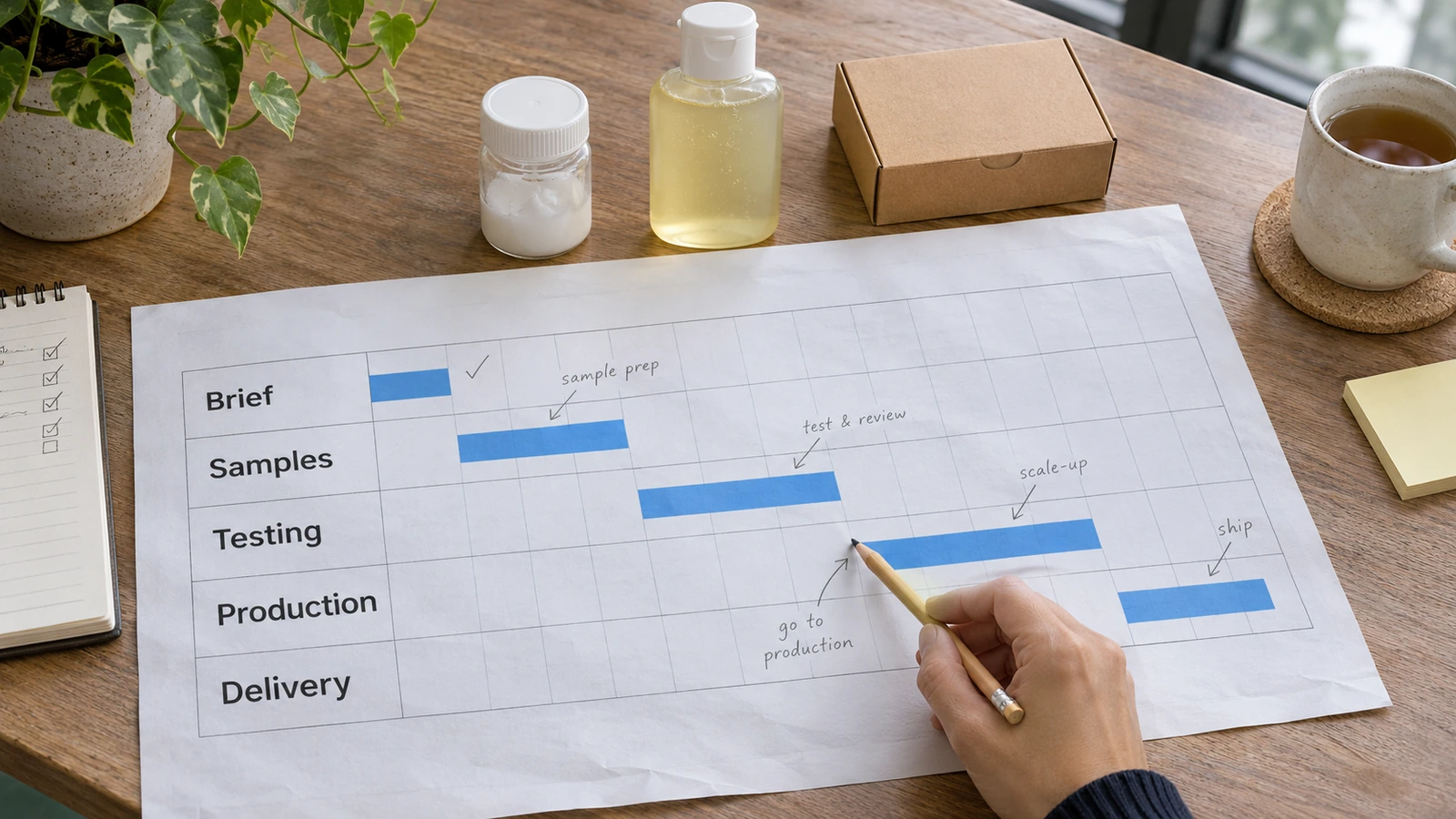
An idea becomes a production-ready product through a series of controlled decisions. The exact sequence varies with the formula, packaging, destination market and degree of customization, but most projects contain the following workstreams.
| Stage | Main work | Release point before the next commitment |
|---|---|---|
| Brief and feasibility | Define the product, consumer, use, claims, markets, pack direction, quantity and commercial limits | Written brief and documented open questions |
| Formula and samples | Select a development route, prepare samples, collect structured feedback and control versions | Approved formula direction and reference sample |
| Packaging | Select the bottle, closure, pump, label and secondary pack; check line and product fit | Approved component specifications and compatibility plan |
| Testing and market preparation | Plan product-specific tests, support claims, prepare market documents and finalize label content | Required evidence and market tasks are assigned and complete enough for launch |
| Production preparation | Freeze specifications, artwork, order quantity and approved standards; purchase materials and reserve capacity | Signed production approval pack and available released materials |
| Bulk production and shipment | Manufacture, fill, close, label, inspect, pack, release and dispatch | Released finished goods and agreed shipping documents |
Some work can overlap. The bottle search can begin while the formula is being sampled if viscosity, chemical compatibility, fill method and closure needs are understood well enough. Draft artwork can begin before all testing is complete if the copy is still controlled as a working version. Commercial planning can continue throughout.
Overlap becomes risky when a provisional choice is treated as final. In the example project, the brand can compare amber bottles during early sampling. It should not place the full packaging order until the selected bottle, neck finish, pump, dip tube, label material and formula direction have been checked as one system.
2 Start with a Clear Brief and Feasibility Review
The brief is the first working specification. It does not need to contain every final answer, but it must separate firm requirements from preferences and open questions.
For the shampoo and body wash example, a useful brief would state:
- intended user and use occasion for each product;
- target markets and planned sales channels;
- desired appearance, fragrance, texture and in-use experience;
- claims being considered, with clear priority between essential and optional claims;
- packaging format, nominal fill quantity and dispensing preference;
- target price position, expected order quantity and launch priorities;
- benchmark products or sensory references, without asking the manufacturer to copy protected work;
- ingredients, materials or claim language that must be included, excluded or reviewed;
- who can approve formula, packaging, artwork, cost and compliance decisions.
The feasibility review converts that brief into a workable route. The manufacturer should identify which requirements can be supported with an existing platform, which need custom development, which depend on supplier information or testing, and which conflict with the target cost, pack or market route.
Consider one common conflict. The brand wants a thick shampoo, a narrow-neck pump and a highly transparent amber bottle. The team cannot evaluate those choices separately. Viscosity affects pump performance. The bottle neck limits the available pump. Formula color and clarity affect the appearance through amber material. The feasibility review should make these dependencies visible before the project commits to components or artwork.
A good output from this stage is a decision register with three simple labels: confirmed, to be tested and to be decided. It should also name the person responsible for each open item. That is more useful than a long email thread in which every suggestion looks equally final.
3 Formula Development Sampling and Feedback
Formula development starts with the agreed brief and the manufacturer's feasible development route. That route may use an existing base, a modified platform or a more customized formula. The commercial meaning, ownership and permitted use of the formula should be agreed separately; the sample process should not be used as a substitute for those contract terms.
Make each sample answer a question
An early sample may be intended to confirm texture and fragrance direction. A later sample may check pump behavior or support a more complete test program. Those samples have different purposes, so the project record should identify what each version is meant to decide.
For the example range, the first shampoo sample might be reviewed for appearance, fragrance, foam, rinsing and after-feel. The body wash may use a related fragrance but require a different sensory target. The brand should compare each sample with the written brief and any agreed benchmark, rather than reacting only with comments such as make it more premium or make the fragrance stronger.
Useful feedback is specific enough to act on:
- what was evaluated and under what ordinary use conditions;
- which attributes met the brief;
- which attribute should change and in what direction;
- whether the change is essential or optional;
- which sample version the comment refers to;
- whether the rest of that version should stay unchanged.
Combining feedback from several people before sending it to the manufacturer prevents contradictory requests. The project lead should also close each round by recording the next action. Without version control, a team may approve the fragrance from one sample, the viscosity from another and the color from a third, even though that combined product has never been made or reviewed.
Know what sample approval means
Approving a lab sample confirms a product direction. It does not by itself prove that the final formula, manufacturing process, commercial packaging and market evidence are complete. Scale, equipment, ingredient lots, filling conditions and packaging interaction may create new questions. The later approval pack should identify the final formula version and any agreed production reference rather than relying on a photo or an undated sample jar.
4 Packaging Sourcing and Compatibility Work
Packaging is a functional system. The bottle, neck finish, pump, dip tube, gasket, label, carton and filling line must work with the formula and with each other.
For the example range, using the same amber bottle family can simplify the visual system and component purchasing. It does not mean the shampoo and body wash automatically use the same pump. If their viscosity and use experience differ, the team may need different pump specifications while keeping the bottle appearance consistent.
Review the component specification before the decoration
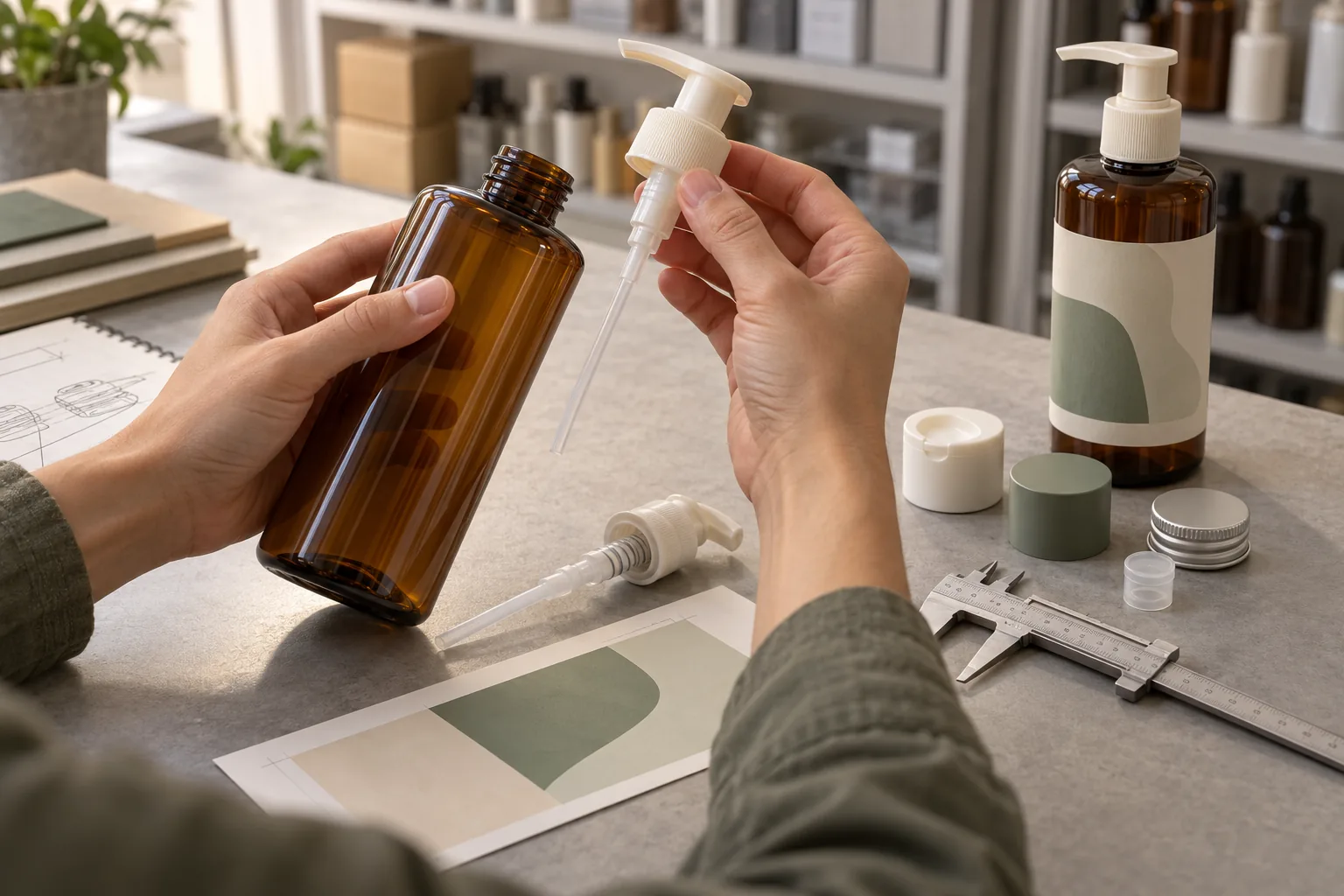
The packaging review should confirm the bottle material and capacity, brimful and nominal fill expectations where applicable, dimensions, neck finish, closure fit, pump or cap specification, dip-tube length, decoration area, label material and case-pack arrangement. The manufacturer also needs to confirm that the component can be handled by the intended filling, capping and labeling equipment.
Visual choices remain important, but decoration should be built on the actual component drawing or verified sample. A label designed from an approximate bottle image can wrinkle across a taper, cover a seam or leave too little space for required information.
Treat compatibility as a planned workstream
Formula-package compatibility considers more than leakage. The project may need to observe changes in appearance, odor, color, viscosity, container shape, stress cracking, swelling, paneling, staining, migration, closure function or dispensing behavior, depending on the product and pack.
ISO/TR 18811 explains why there is no single stability protocol for every cosmetic product. The manufacturer must select and justify suitable methods, specifications and conditions for the actual product. The same principle applies to the timing of packaging decisions: the test plan should reflect the final formula and contact materials closely enough to support the intended conclusion.
Packaging sourcing and formula development can proceed in parallel once the technical boundaries are clear. Full commercial commitment should wait until the project team understands what remains provisional and what change would require compatibility work to be reconsidered.
5 Testing Claims and Market Preparation
Testing and market preparation should begin as planning activities near the start of the project. The evidence itself becomes more meaningful as the formula, process, packaging and claims become final.
Build one evidence plan around the final product
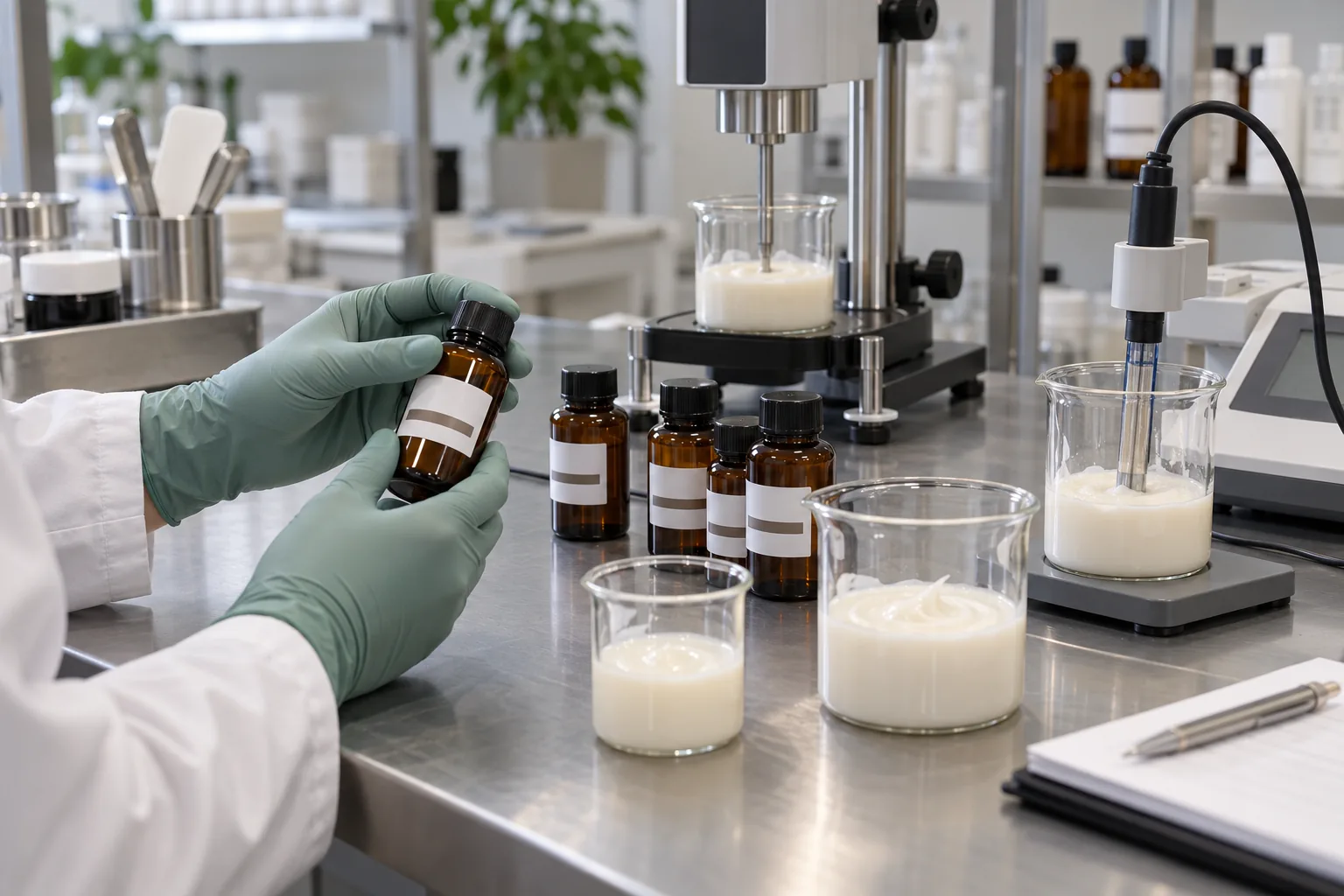
The required program depends on the product and destination market. It may include stability, microbiological quality, preservation assessment, formula-package compatibility, transport or pack-performance work, safety support and claim substantiation. The project should distinguish early development screening from evidence intended to support the finished product.
ISO 11930 provides a reference approach for evaluating antimicrobial protection for products within its scope, while ISO 29621 supports documented identification of microbiologically low-risk products. These standards do not create one universal test package for every shampoo, body wash or market. The project needs a product-specific assessment.
The test plan should record:
- the exact formula and packaging version being tested;
- the purpose of each test and the decision it supports;
- sample quantity, condition and traceability;
- the method or protocol and acceptance approach;
- who commissions, reviews and owns the report;
- what type of change would make the evidence no longer representative.
Finalize claim direction before artwork approval
Claims influence formula development, evidence needs, label review and sometimes product classification. In the European Union, cosmetic claims must meet the common criteria in Commission Regulation (EU) No 655/2013 and be consistent with supporting documentation. In the United States, claims that treat or prevent disease or affect body structure or function can make a product subject to drug requirements.
For the example shampoo, a general cleansing or appearance claim follows a different review path from an anti-dandruff or hair-loss treatment claim. The team should resolve that direction before approving final artwork. Changing the claim after testing can leave the evidence mismatched. Changing it after printing can also create avoidable packaging waste.
Assign market tasks instead of assuming the factory owns them
An OEM partner may provide formula information, manufacturing records, test support and other agreed documents. The brand or another responsible party may still own market-specific safety assessment, notification, listing, label approval or post-market duties. The exact division depends on the market and agreement.
For an EU launch, Regulation (EC) No 1223/2009 links market placement to responsibilities including a Responsible Person, safety assessment, Product Information File, notification and compliant labeling. For the United States, MoCRA assigns facility registration and product-listing duties to defined parties, subject to applicable exemptions, and the FDA does not treat registration or listing as product approval. These tasks belong in the project plan with named owners and dates.
6 From Final Approval to Mass Production and Shipment
Production should begin from a controlled approval pack, not from scattered email confirmations. The pack normally brings together the final formula identifier, manufacturing and finished-product specifications, approved packaging components, artwork version, order quantity, market instructions, required test or document status and agreed release criteria.
Freeze the inputs that production will use
Before materials are committed and production is scheduled, the project team should confirm:
- the approved formula and product specification;
- the approved bottle, pump or cap, label and carton specifications;
- the final artwork files and their version status;
- purchase quantities, acceptable tolerances and agreed overage handling;
- production, inspection, retention and document requirements;
- shipping configuration, destination and required commercial documents;
- the process for approving any substitution or deviation.
This is the point at which an unresolved preference becomes expensive. A late pump change may affect component availability, dip-tube length, compatibility work, carton height, label copy and case packing. The correct response is to assess the change across those dependencies before production, not to update one purchase order and hope the rest still fits.
Follow the physical production sequence
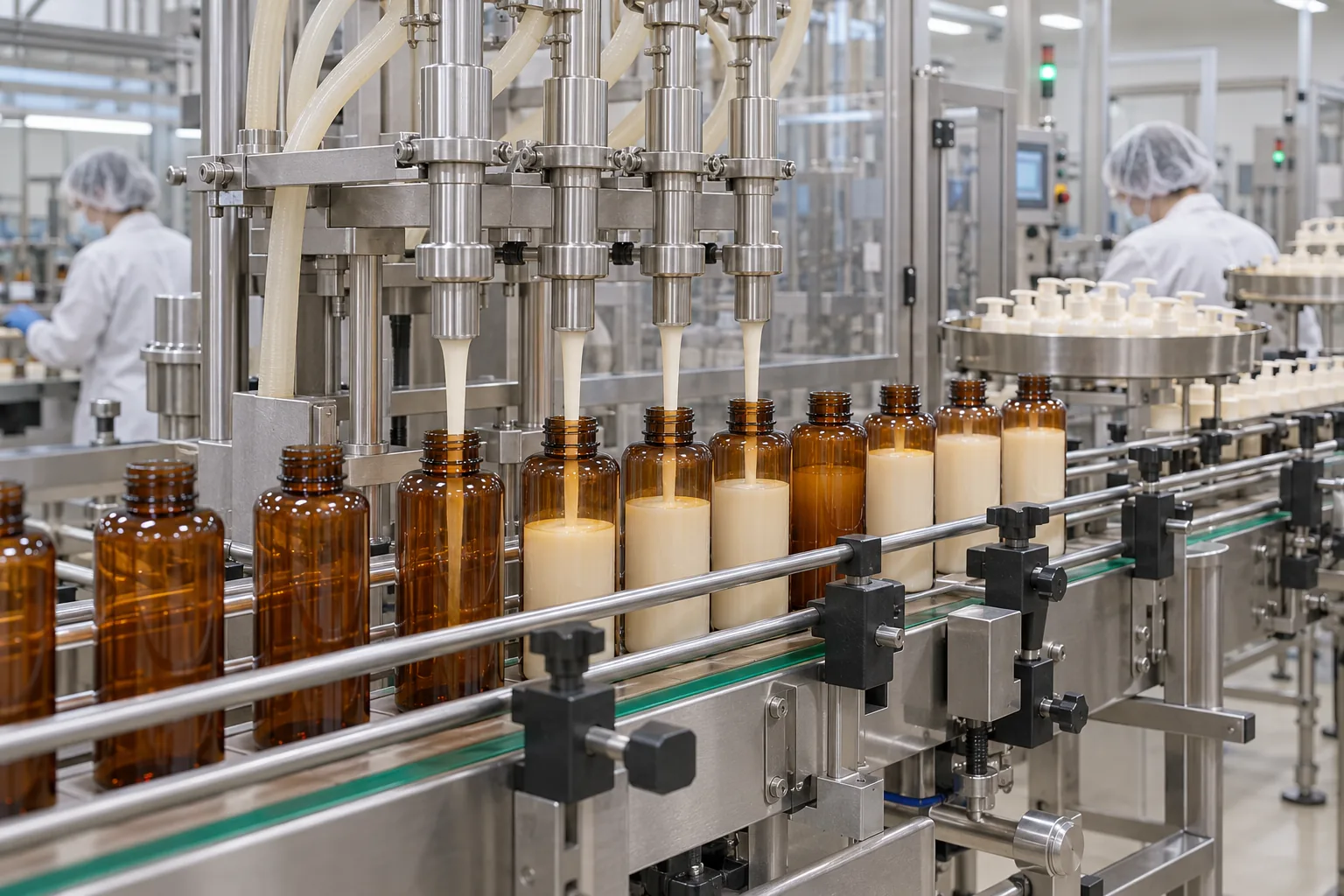
The exact line depends on the product and factory, but a typical liquid hair or body care sequence includes released materials, bulk manufacture, in-process checks, transfer to the filling operation, container filling, closure application, label or decoration steps, finished-product checks and packing. Open containers are filled before pumps, caps or lids are applied. A line may decorate components earlier or later depending on the approved process, but the active filling station must match the container and closure sequence.
ISO 22716 covers quality guidance for cosmetic production, control, storage and shipment. In practice, the release decision should be tied to the approved specification, batch and packaging records, completed agreed checks and any deviation review. A finished pallet is not automatically a released shipment simply because the cartons are sealed.
Pack and ship the approved finished configuration
Shipment planning should use the same finished pack that the project approved. Case quantity, dividers, carton strength, pallet pattern, stretch wrap, labels and shipping marks affect handling and traceability. The team should confirm the delivery basis and document responsibilities before the goods reach the loading stage.
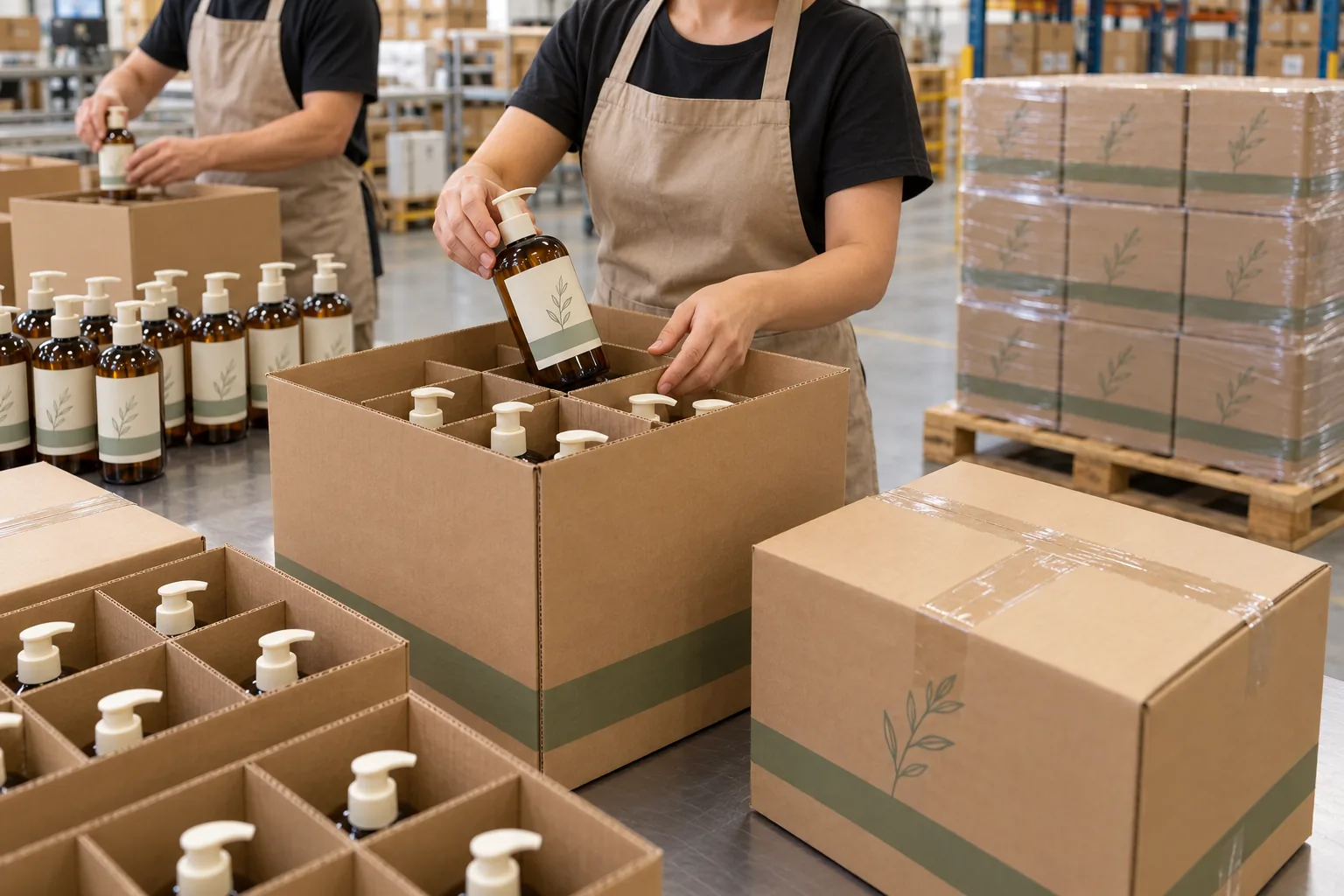
For the example range, the final checkpoint is easy to visualize: labeled amber bottles with their approved cream pumps, separated correctly in printed or labeled cartons, stacked in a stable pallet configuration, and accompanied by the agreed documents. Blank prototypes, open samples and unresolved artwork no longer belong in this stage.
7 Why OEM Projects Get Delayed and How to Prevent Rework
Most avoidable delays come from decisions being made in the wrong order or without a clear owner. The table below shows how the issue travels through the project.
| Delay source | What it disrupts | Practical prevention |
|---|---|---|
| The brief keeps changing | Sample versions, cost basis, packaging search and claims plan | Mark essential requirements, preferences and open questions separately; approve changes through one project lead |
| Feedback is vague or conflicting | Formula iterations and sample interpretation | Consolidate comments by sample version and state the requested direction and priority |
| Packaging is ordered before technical fit is understood | Compatibility, pump performance, filling setup and artwork | Approve the complete component specification and document remaining risks before the commercial order |
| Claims are added after tests or artwork | Evidence, product classification, label text and printed stock | Freeze claim direction before final evidence and artwork approval |
| The target market is confirmed late | Label content, responsible parties, documents and launch tasks | Put markets in the initial brief and assign a market owner for each destination |
| Several people can approve the same item | Repeated reversals and contradictory instructions | Use one decision register with named approvers for formula, packaging, artwork, cost and compliance |
| A supplier change is treated as an equivalent swap | Compatibility, specifications, appearance and documentation | Review substitutions against the approved specification and change-control process before use |
| Forecasts and order quantities arrive late | Material purchasing and capacity planning | Confirm the commercial scenario early and update it at agreed decision points |
The prevention method is simple to describe but requires discipline: record the current version, the owner, the decision needed, its deadline and what depends on it. A weekly project list should focus on unresolved decisions rather than repeat every completed activity.
When a delay occurs, the team should identify the blocked dependency. If artwork is waiting for final claims, accelerating the printer does not solve the problem. If compatibility work is waiting for the commercial pump, more formula samples do not release the packaging. Clear dependencies help the project recover without creating parallel rework.
Conclusion
A realistic OEM timeline is built around approvals and dependencies. Formula, packaging, testing, market preparation and production can overlap, but each commercial commitment needs a stable input and a named decision maker.
Brands can make the process easier by preparing a clear brief, giving version-specific sample feedback, reviewing packaging as a system, agreeing claims before final artwork, assigning market responsibilities and controlling changes after approval. Manufacturers can support the same outcome by stating assumptions, recording versions, explaining technical dependencies and defining the evidence required for production release.
If you are planning a hair care or body care product, share the product type, target markets, formula and sensory direction, packaging preference, claims and expected order quantity. Those details are enough to begin a practical feasibility review and map the decisions that lead to bulk production.
Frequently Asked Questions
How long does a cosmetic OEM project take
There is no reliable universal duration. The timeline depends on the degree of formula customization, number of sample rounds, packaging availability, testing plan, target markets, artwork approvals, order quantity and factory capacity. Ask for a milestone plan that shows dependencies and assumptions rather than a single date with no basis.
Can formula development and packaging sourcing run at the same time
Yes, when the team knows enough about viscosity, chemical compatibility, fill method, closure type and target appearance to narrow the pack options. Keep early choices provisional until the selected formula and complete component system have been checked together.
When should we place the packaging order
The answer depends on supply risk and the cost of change. Before placing the full order, confirm the component specification, formula direction, compatibility plan, decoration area, artwork basis and filling-line fit. If an early reservation or deposit is commercially necessary, document the remaining technical risk and who accepts it.
Is an approved lab sample ready for mass production
Not by itself. A lab sample approves a development direction. Production also needs the final formula and specifications, approved packaging and artwork, required evidence, released materials, agreed process instructions and a defined finished-product release route.
Which tests should be completed before bulk production
The answer is product and market specific. The team should identify which work supports formula selection, which requires the final pack, which supports claims or market files and which must be complete before shipment or sale. The testing plan should name the formula and packaging version it represents.
What happens if we change the pump or formula after approval
The change should enter a documented review. The team determines whether it affects compatibility, dispensing, specifications, cost, testing, claims, artwork, production setup or market documents. Some changes are limited; others restart several dependent tasks.
References
These official sources support the manufacturing, testing and market-preparation principles in this article. They do not replace product-specific regulatory review.
1. International Organization for Standardization. ISO 22716:2007 Cosmetics Good Manufacturing Practices Guidelines on Good Manufacturing Practices. Official source
2. International Organization for Standardization. ISO/TR 18811:2018 Cosmetics Guidelines on the stability testing of cosmetic products. Official source
3. International Organization for Standardization. ISO 11930:2019 Cosmetics Microbiology Evaluation of the antimicrobial protection of a cosmetic product, with Amendment 1:2022. Official source
4. International Organization for Standardization. ISO 29621:2017 Cosmetics Microbiology Guidelines for the risk assessment and identification of microbiologically low-risk products. Official source
5. European Union. Regulation EC No 1223/2009 on cosmetic products. Official source
6. European Union. Commission Regulation EU No 655/2013 laying down common criteria for the justification of claims used in relation to cosmetic products. Official source
7. U.S. Food and Drug Administration. Cosmetics Labeling Claims. Official source
8. U.S. Food and Drug Administration. Registration and Listing of Cosmetic Product Facilities and Products. Official source
Sources checked 21 October 2026.