BLOG 05 / MANUFACTURING STRATEGY
A practical guide to investment, control, product development and choosing a production model
The short answer
Owning a factory gives a brand direct control over its production operation, but it also means taking on equipment, people, quality systems, purchasing, maintenance and the cost of keeping capacity productive. Working with an OEM/ODM manufacturer lets a brand access an established production and development setup without building all of it itself. That usually reduces the need for upfront manufacturing investment; it does not automatically guarantee a lower unit cost, a lower minimum order quantity or a faster launch.
The right model depends on what the brand needs to control, how predictable its demand is, how much technical capability it already has and whether manufacturing itself is a core competitive advantage. For many emerging hair and body care brands, outsourcing is a practical starting point. For a business with stable high-volume demand, specialist processes or a strong manufacturing team, in-house production may make sense. Some brands use a hybrid model.
This guide compares the models in the order a brand needs to make the decision: understand the terms, calculate the real operating burden, agree who does what, compare the commercial trade-offs and choose a route that fits the business.
1. What Are the Different Cosmetic Manufacturing Models?
The terms OEM, ODM, private label and contract manufacturing are often used loosely in the cosmetics industry. They are commercial labels rather than one universal legal classification, and suppliers do not always use them in exactly the same way. Before comparing quotations, define the actual work each party will perform.
| Model | What it usually means | What the brand typically controls |
|---|---|---|
| In-house manufacturing | The brand owns or directly operates the production setup and manages manufacturing itself. | Production priorities, process decisions and day-to-day factory operations, subject to applicable requirements. |
| Contract manufacturing | A broad term for paying an external manufacturer to make products under an agreed specification. It can include OEM and ODM arrangements. | Product brief, commercial terms, approvals and the scope agreed with the manufacturer. |
| OEM | Often used when a manufacturer produces to a buyer’s specification, which may include a buyer-supplied formula, packaging brief or technical requirements. | The buyer may provide more of the formula or specification; the exact boundary is contractual. |
| ODM | Often used when the manufacturer contributes more product development, such as a base formula, texture direction, packaging options or a complete product concept. | The brand sets the market position and requirements, then reviews and approves the proposed product. |
| Private label | Usually a ready-developed or existing product sold under the customer’s brand, sometimes with limited fragrance, packaging or other adjustments. | Branding and available customization choices; depth of customization depends on the program. |
These models overlap. An ODM project can also be a contract-manufacturing project, and a brand that owns a factory may still outsource a specialist product or a temporary production peak. The useful question is not which label sounds best; it is who develops the product, who owns or licenses the formula and tooling, who approves changes, who manufactures the batch and who is responsible for each launch requirement.
2. What Manufacturing Capabilities Must Be Covered?
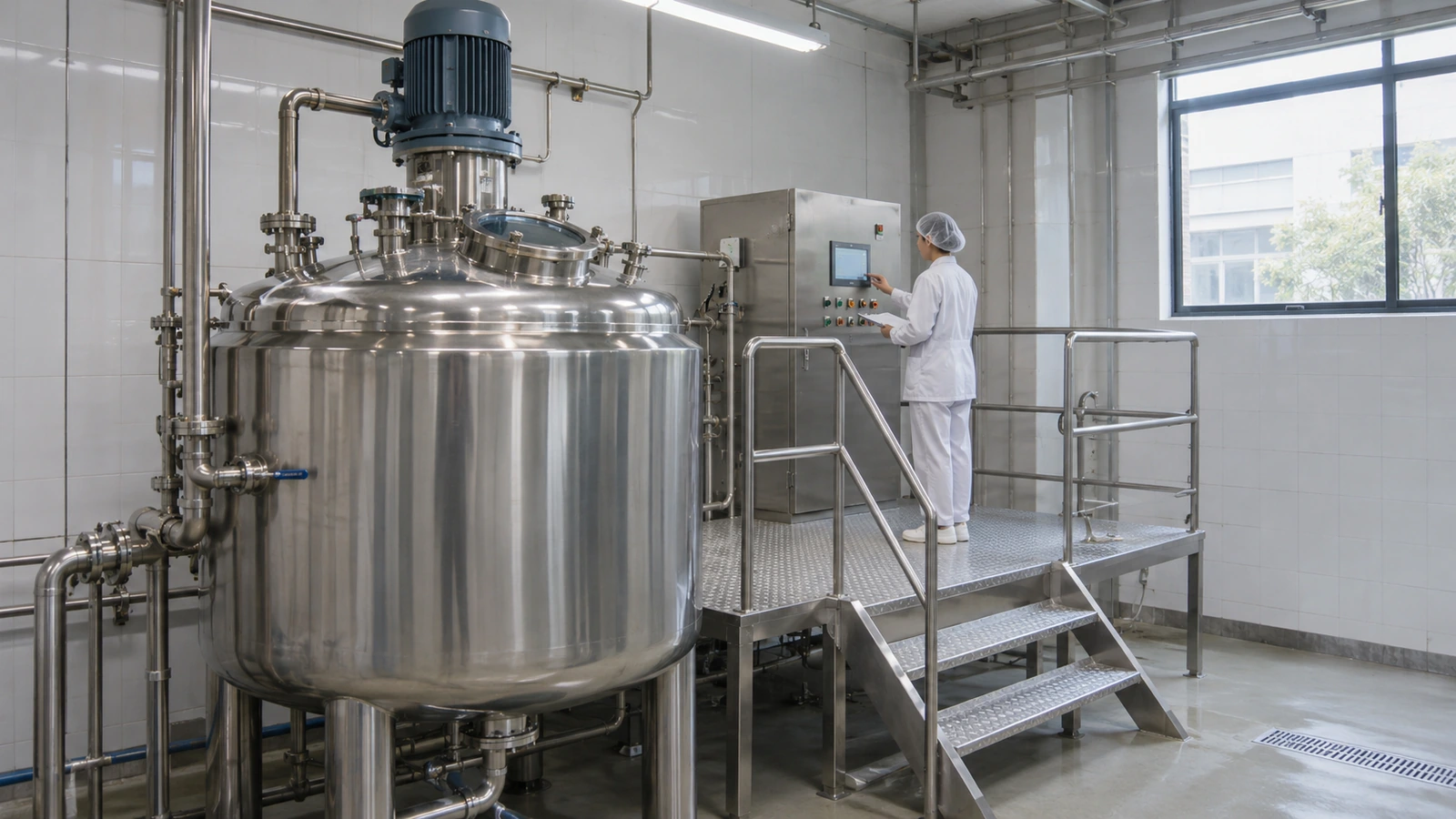
Before choosing between in-house production and an OEM/ODM partner, a brand should identify the manufacturing capabilities its products require. The work does not disappear when it is outsourced; the production model determines who provides each capability and how the brand oversees it.
Production and equipment fit
The production process must suit the product format. Shampoos, creams and pressurized aerosols need different mixing, filling and handling equipment, along with appropriate cleaning, maintenance and trained operators. An in-house team must build and manage this capability, while an external manufacturer must demonstrate that its existing setup can meet the agreed specification.
Quality and traceability
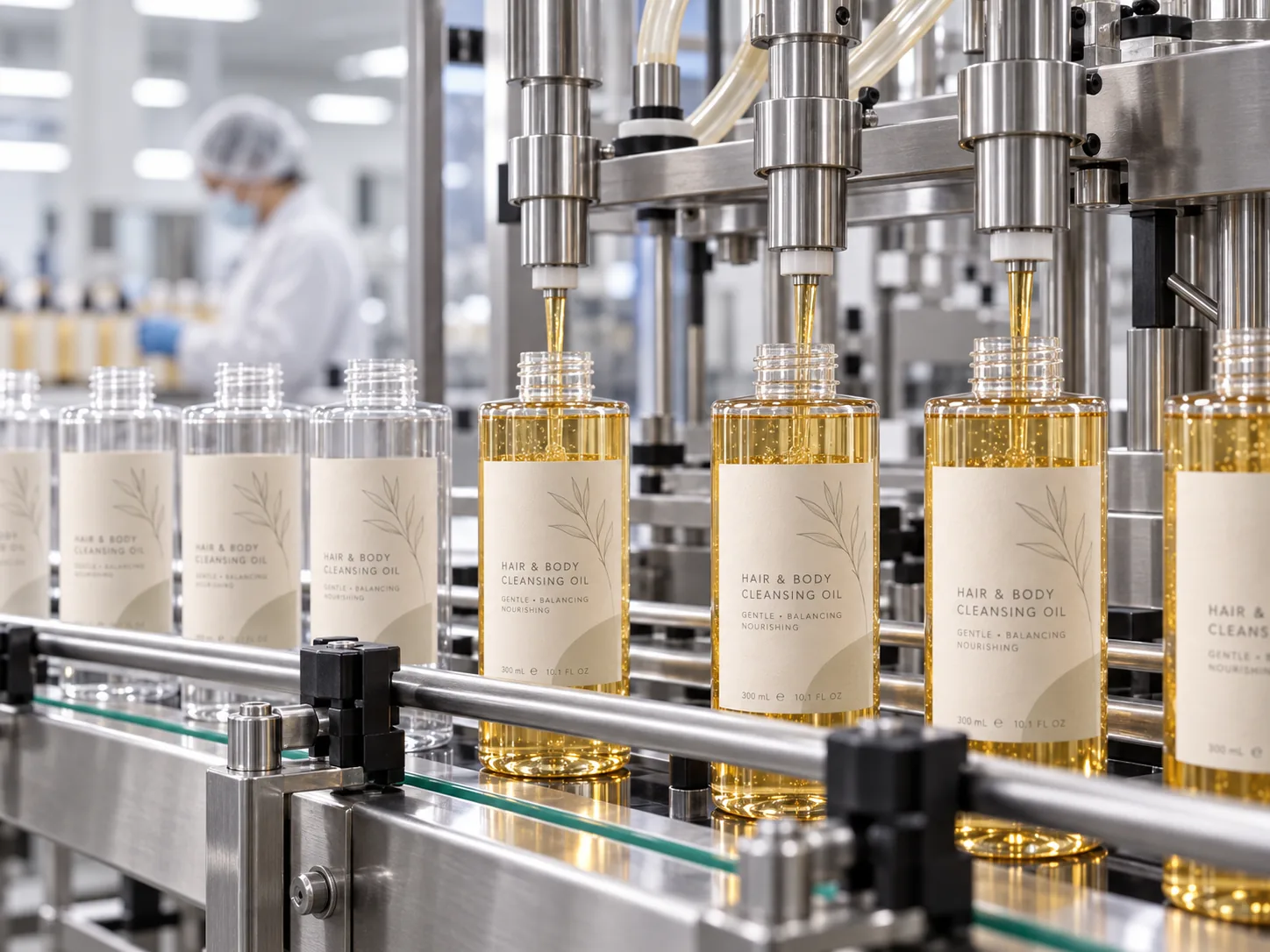
Repeatable production depends on defined instructions, trained people, material checks, batch records, finished-product specifications, deviation handling and traceability. ISO 22716 provides GMP guidance for cosmetic production, control, storage and shipment. Whether these systems are operated internally or by a manufacturing partner, the brand still needs agreed standards, documentation and approval points.
Planning and capacity
Ingredients and packaging may have supplier minimums, and usable capacity is affected by changeovers, cleaning, maintenance and downtime. An in-house operation carries these costs directly; an outsourced project reflects them through MOQ, lead-time and pricing terms. The comparison therefore depends on actual demand and production requirements, not simply on who owns the equipment.
These capabilities do not disappear when production is outsourced. They are divided between the manufacturer and the brand, so the next step is to define who performs each task, who approves key decisions and who remains responsible for the product in the target market.
3. What Can an OEM/ODM Partner Do—and What Remains with the Brand?
A good OEM/ODM project begins with a written brief and responsibility map rather than an assumption that the manufacturer will handle everything. Each workstream needs a named owner, required inputs and clear approval points.
| Workstream | Manufacturer’s typical role | Brand’s typical role |
|---|---|---|
| Product concept | Advise on feasibility, available formats, development routes and manufacturing constraints. | Define target customer, positioning, price point, intended use and product priorities. |
| Formula and samples | Develop or manufacture samples to the agreed brief; document formula versions and technical changes. | Give specific feedback, approve the selected version and agree the required product performance. |
| Packaging | Source or evaluate components, check filling compatibility and coordinate agreed production requirements. | Choose brand appearance, approve artwork and components, and confirm commercial specifications. |
| Manufacturing and quality | Follow agreed specifications and controls; maintain batch records, traceability and agreed quality checks. | Set acceptance criteria, review agreed documentation and make timely decisions when issues arise. |
| Market preparation | Provide agreed product and manufacturing information and support testing or documentation within the contract scope. | Set target markets and claims, coordinate market-entry requirements and ensure the correct legal parties are appointed. |
| Forecasts and launch | Confirm capacity, lead-time assumptions, purchasing dependencies and production milestones. | Provide realistic forecasts, approvals, order quantities and launch plans. |
Some work is shared. Formula development, packaging compatibility, testing plans, claim substantiation and launch timing often require decisions from both sides. Delays commonly occur when one party assumes the other has approved a formula, label, component or regulatory task when no one has formally done so.

Outsourcing production does not automatically outsource legal responsibility
The legal roles depend on the destination market and the way the product is placed on the market. Under the EU Cosmetics Regulation, the definition of “manufacturer” includes a person who has a cosmetic product manufactured and markets it under that person’s name or trademark. In the United States, MoCRA defines the cosmetic “responsible person” by reference to the manufacturer, packer or distributor whose name appears on the label, and assigns that person specific duties. These examples show why a brand should agree regulatory responsibilities early instead of assuming that a contract manufacturer automatically takes them over.
For every project, identify who will provide the formula and ingredient information, who will review claims and artwork, who will arrange the required safety assessment or market filing, who will keep the relevant records and who will handle complaints or recalls. Put the agreed division in writing and verify the actual rules for each target market.
4. How Do Investment, Cost, MOQ, Speed and Control Compare?
The central financial difference is the cost model. In-house production requires investment in assets and a continuing operating base. OEM/ODM converts much of that factory investment into project and purchase-order costs. The two models should be compared on the same product specification, volume, quality expectations and delivery basis.
| Decision factor | In-house production | OEM/ODM manufacturing |
|---|---|---|
| Upfront investment | Usually higher: facilities, equipment, installation, systems and team capability must be established or expanded. | Usually lower on factory assets because the supplier already has the production setup; development, tooling or testing may still require upfront spending. |
| Unit cost | Can become competitive when volume and line utilization are stable; low utilization spreads fixed costs over fewer units. | Quotation includes the supplier’s materials, conversion work, overhead and margin. It may cost more per unit but avoid the cost of owning idle capacity. |
| MOQ | The practical batch size is limited by vessel and line efficiency, raw-material purchases, component MOQs and changeover costs. | The supplier’s minimum depends on batch size, production scheduling and packaging suppliers. Outsourcing does not automatically mean a very low MOQ. |
| Launch speed | Can be fast if the line, formula, team and controls are already proven; slower if the operation is still being built or qualified. | Can be faster when the supplier has suitable base formulas, components and capacity. Bespoke formulas, special packaging and approval delays still take time. |
| Day-to-day control | Direct control of scheduling and manufacturing priorities, within the operation’s capabilities. | Control is exercised through specifications, approvals, agreed change control, reporting, audits and contract terms. |
| Technical range | Limited by the equipment, expertise and supplier network the business has built. | Can draw on the manufacturer’s existing equipment, technical experience and sourcing network, subject to the supplier’s real capabilities. |
| Flexibility | High for changes the team can execute, but changes still consume time, materials and line capacity. | Depends on the agreement, minimum order requirements, supplier capacity and how much of the formula or pack is customized. |
| Operational risk | The brand carries direct responsibility for maintaining the factory, staffing, production consistency and capacity utilization. | The brand depends on supplier performance and needs a plan for quality issues, delays, formula or component changes and continuity of supply. |
Compare the total cost—not just the factory quote
For in-house production, include equipment depreciation or financing, facility costs, wages, utilities, maintenance, quality operations, inventory, waste, line changeovers and the management time required to run the operation. For OEM/ODM, compare the quoted product and packaging specification, development or tooling fees, testing, freight, duties, warehousing, inspection and the cost of managing the supplier relationship. The exact categories depend on the project, but the comparison should use the same finished-product scope.
A low OEM quotation is not automatically the lowest landed cost, just as a low theoretical in-house conversion cost is not proof that owning a line will save money. Capacity utilization, component minimums, defect rates, order frequency and the work needed to manage production can change the result.
MOQ is a production decision, not just a supplier rule
A manufacturer may need a minimum batch to run a mixing vessel efficiently, schedule the filling line and cover setup and cleaning. The bottle, pump, label or carton supplier may also have its own minimum order. A brand can sometimes reduce the initial commitment by choosing stock packaging, limiting the number of variants, using shared components across a range or launching fewer products first. The right option depends on the product and supplier setup; simply asking for a lower MOQ does not remove the underlying production and purchasing constraints.
Control can be contractual as well as physical
Owning the factory gives direct operational control, but it does not by itself guarantee better quality or a better product. An outsourced project can still have strong control when the specification, approved sample, formula version, packaging artwork, acceptance criteria, change-notification process and record requirements are clearly agreed. The brand should also clarify formula ownership or license rights, exclusivity, tooling ownership, confidentiality, permitted substitutions and what happens if the relationship ends.
5. When Does In-House Manufacturing Make More Sense?
Owning or directly operating production may be a strong choice when several of the following are true:
- Demand is established and reasonably predictable, with enough recurring volume to keep the relevant equipment productive.
- Manufacturing know-how or a proprietary process is central to the company’s competitive advantage.
- The business has the capital, technical team and management capacity to operate a factory—not only to purchase equipment.
- Production control, scheduling or confidentiality requirements are difficult to achieve through an external partner.
- The company has a broad enough product portfolio to use shared equipment and staff efficiently.
Even in these cases, outsourcing selected products, specialist formats or temporary overflow can still be commercially sensible. The choice does not have to be all-or-nothing.
6. When Is OEM/ODM the More Practical Route?
Working with an external manufacturer is often a better starting point when a brand needs to:
- Launch a first product or test demand before committing substantial capital to manufacturing assets.
- Develop a product range without hiring a full technical and production team from day one.
- Access existing filling formats, packaging options and manufacturing experience that would be expensive to build internally.
- Manage several product types or market opportunities without investing in a separate line for each one.
- Keep internal resources focused on brand positioning, sales, distribution, consumer research and product strategy.
OEM/ODM is not a shortcut around product development. A custom formula, specialized packaging, performance testing or market-specific documentation still requires time, decisions and budget. The advantage is that the brand can work with an existing manufacturing capability instead of having to create the entire operation itself.
7. A Hybrid Model Can Be the Right Answer
A brand can outsource production while it proves demand, then reconsider the production model as order volume, product complexity and technical capability grow. It might keep standard shampoos and body washes with an OEM/ODM partner while investing internally in a distinctive product or process. Another business may own a small pilot setup but outsource commercial-scale filling. A third may outsource all manufacturing and concentrate on product development and distribution.
These are different operating strategies, not stages every brand must follow. The useful principle is to invest internally when the control, economics or capability gained is worth more than the capital and management burden—not simply because the business has reached a certain age or sales milestone.
8. A Practical Checklist Before You Choose
Before committing to a factory, a supplier or a production model, answer these questions:
- What is the realistic first order, and what repeat-order volume can we support with evidence rather than optimism?
- Which part of the product must be unique: formula, sensory profile, packaging, dispensing system, process or brand experience?
- What manufacturing knowledge and quality-management capability do we already have in-house?
- How much capital can we commit without starving product development, marketing and working capital?
- What minimums apply separately to the formula batch, bottle, closure, label, carton and finished-goods order?
- Which target markets will the product enter, and who will own each required technical file, notification, label review and post-market task?
- Who owns the formula, improvements, artwork, tooling and test data—and what rights continue if the relationship ends?
- How will changes to ingredients, suppliers, packaging or production sites be approved and documented?
- What are the lead-time assumptions, capacity constraints, payment terms and remedies for quality or delivery problems?
- What is the total cost to get an approved, saleable product into the intended market—not merely the cost to fill a bottle?
If several answers are still unknown, begin with a defined product brief and a comparable quotation exercise. Ask potential manufacturers to state what is included, what is excluded, which decisions they need from you and which assumptions affect the price or timeline. A clear brief makes supplier proposals easier to compare and reduces rework after sampling begins.
Frequently Asked Questions
Is OEM/ODM cosmetic manufacturing cheaper than building our own factory?
It usually reduces the need for upfront factory investment, but it does not guarantee a lower unit price. A well-utilized in-house line may become cost-competitive at stable volume. Compare the full operating and landed costs for the same specification and quantity.
What is the difference between OEM and ODM cosmetics?
In common commercial usage, OEM often means manufacturing to a buyer’s specification, while ODM usually includes more product development from the manufacturer. Suppliers use these terms differently, so define formula development, customization, approvals and ownership in the contract.
Can we use our own formula with an OEM manufacturer?
Often, yes, if the manufacturer can process the formula and both parties agree on feasibility, specifications, confidentiality, formula ownership or licensing, and the information needed for safe and consistent production. A lab formula may still need adaptation to the manufacturer’s equipment and process.
Who owns the formula developed during an ODM project?
There is no single answer for every project. The agreement should distinguish the manufacturer’s pre-existing formula or know-how from project-specific developments, then define ownership, license rights, exclusivity, permitted use, transferability and what happens at termination.
Does the manufacturer handle all compliance and registration?
A manufacturer may provide technical documents and support agreed testing or filings, but the legal duties depend on the market, product and parties named or appointed for the product. Assign each task explicitly and verify the destination-market requirements before launch.
Can OEM/ODM manufacturers accept small orders?
Some can, especially when existing formulas and stock packaging are suitable. Minimums still depend on batch efficiency, line scheduling and component suppliers. A simpler initial specification or a smaller first product range can be more effective than requesting a lower minimum without changing the project.
Can a brand switch from OEM/ODM to in-house production later?
Yes, but the transition depends on formula and process documentation, IP and license terms, packaging and equipment compatibility, quality-system readiness and any required validation or market updates. Plan the transfer rights before they become urgent.
Conclusion: Choose the Production Model That Fits the Business
The decision is not simply “factory versus supplier.” It is a choice about where the business should invest its money, people and attention. In-house production offers direct operational control and can make sense when volume, expertise and utilization justify the commitment. OEM/ODM gives brands access to established manufacturing and development capabilities without having to build the whole system themselves. A hybrid approach can preserve flexibility as the product range grows.
For a hair care, body care or personal care project, start by defining the product, target market, preferred formula and texture, packaging direction, customization level and expected order quantity. Those details make it possible to assess a realistic manufacturing route before committing to equipment, components or bulk production.
| Planning a cosmetic OEM/ODM project? Share your product type, target market, intended price position, preferred formula or texture, packaging direction and expected order quantity. These are the starting points for discussing a workable development and manufacturing route. |
|---|
References
These official sources support the regulatory and manufacturing-practice points in this article. OEM, ODM and private label are common commercial terms; their exact meaning should be defined in each project agreement.
- European Union — Regulation (EC) No 1223/2009 on cosmetic products, including the definition of “manufacturer” and the Responsible Person framework. EUR-Lex official text
- U.S. Food and Drug Administration — Modernization of Cosmetics Regulation Act (MoCRA), including the definition of the cosmetic product Responsible Person. FDA official overview
- International Organization for Standardization — ISO 22716:2007, Cosmetics — Good Manufacturing Practices (GMP) — Guidelines on Good Manufacturing Practices. ISO standard page
Sources checked: 20 October 2026.