
What Does It Really Cost to Manufacture Shampoo?
A Practical OEM/ODM Cost Guide for Beauty Brands
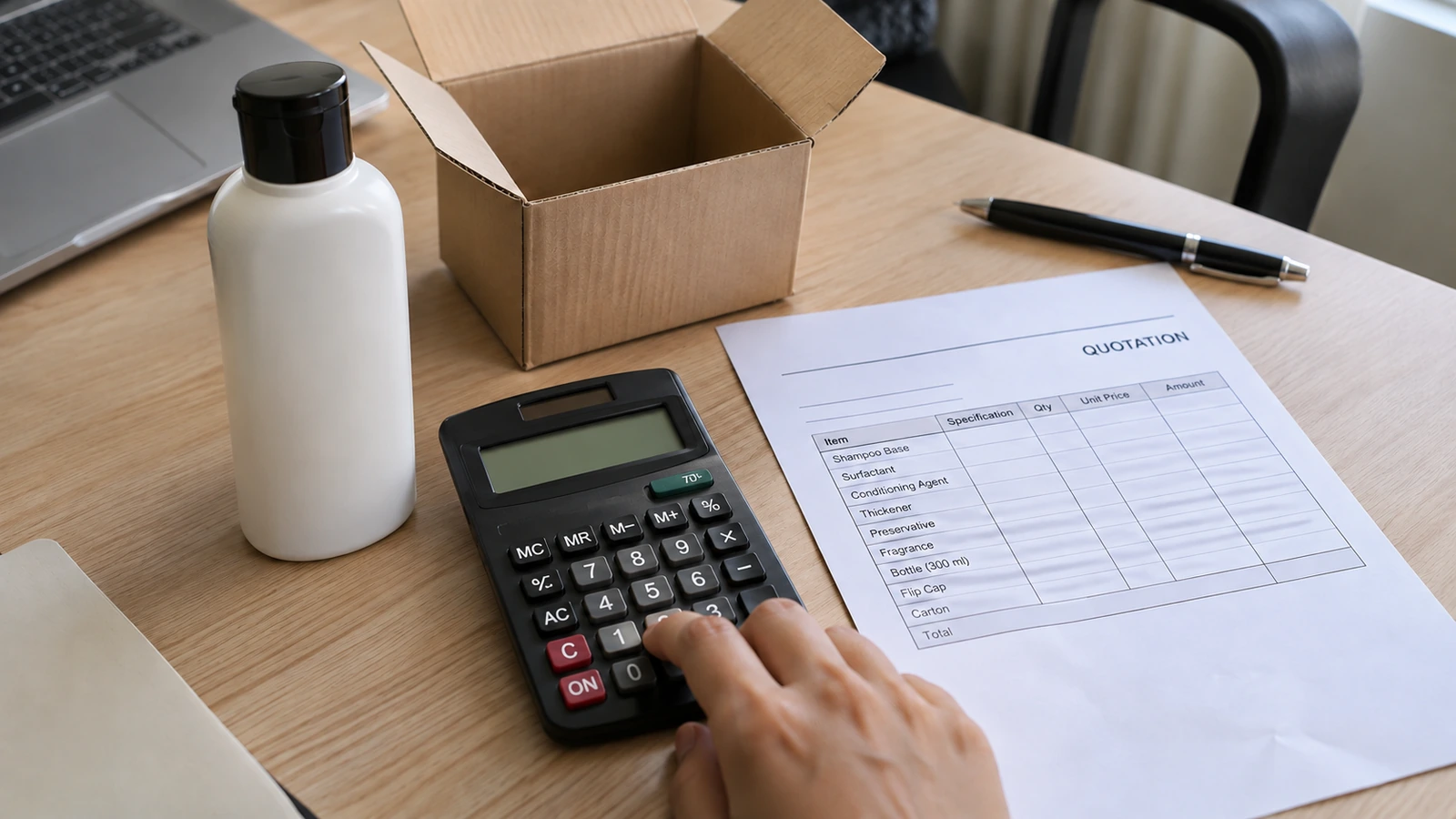
Two 300mL shampoos can look almost identical and still have very different manufacturing costs. The biggest reasons are straightforward: the formula, primary packaging, decoration, order quantity and the amount of work required to turn the bulk product into a finished, export-ready unit.
You do not need a factory cost sheet to understand the economics. A useful buyer only needs to know the normal cost bands, which decisions move the price, and which items should be separated when comparing quotations.
Opening image. Three common 300mL shampoo package levels: standard bottle, pump bottle and premium bottle with folding carton.
Cost at a Glance
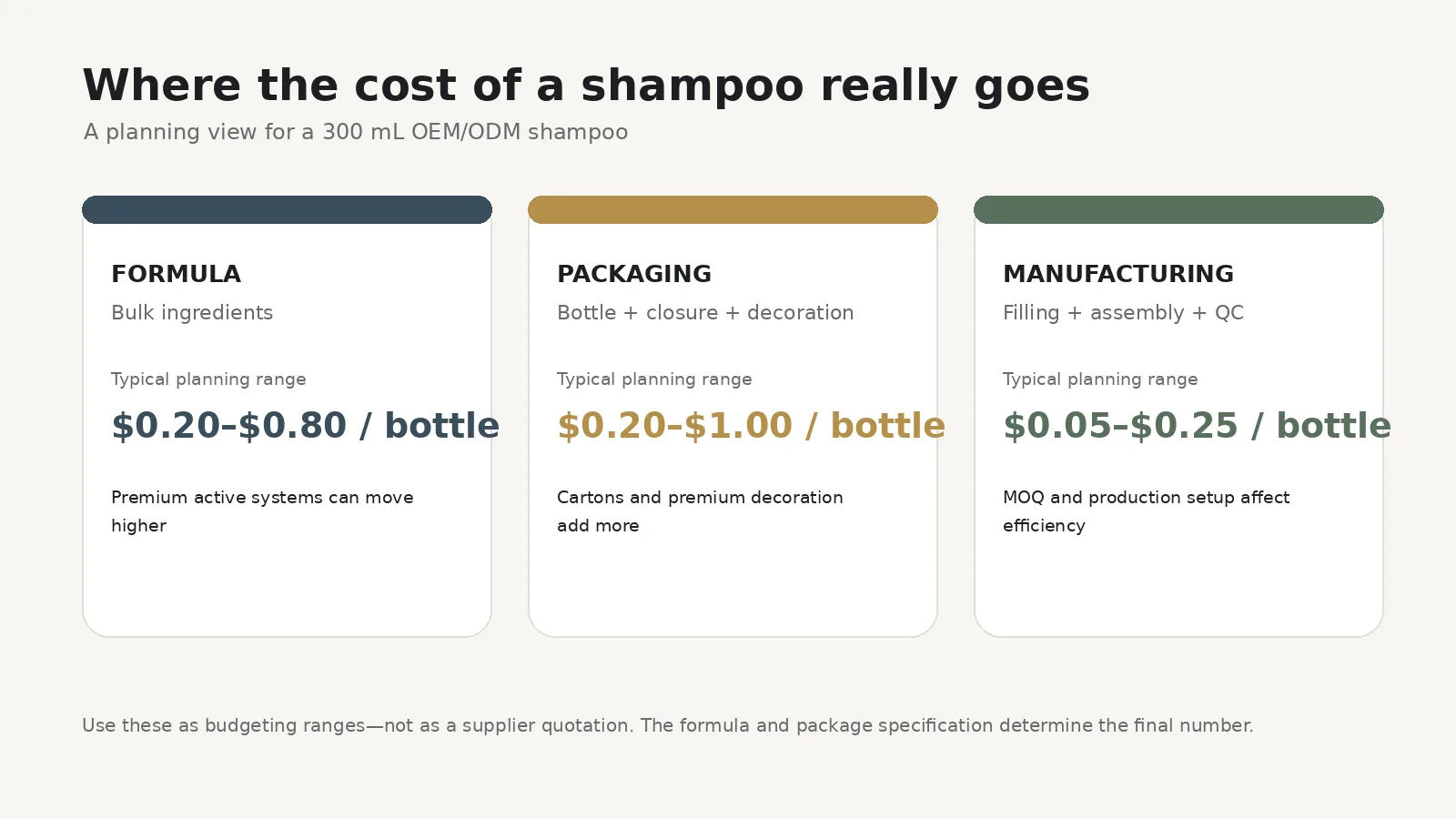
- Formula: the liquid itself. Mainstream shampoo formulas usually sit in a relatively modest cost band; premium surfactants, fragrances and active systems push the cost upward.
- Packaging: bottle, cap or pump, label or direct print, plus any carton or protective pack.
- Manufacturing: mixing, filling, capping, labeling, assembly and routine quality control.
- Logistics: master cartons, pallets, inland transport, international freight, duties and destination charges.
1. What Are You Actually Paying For?
A supplier's finished-goods quotation is not simply the price of the liquid. It normally reflects the formula, packaging, production work, quality control, packaging losses and the supplier's operating and commercial costs. That is why a very low formula cost does not automatically produce a low finished-product price.
Before comparing two quotes, make the specifications identical: fill size, formula direction, bottle, closure, decoration, order quantity, packing method and delivery term. A 300mL flip-top bottle with a label and a 300mL pump bottle with a carton are different cost structures even when the shampoo inside is identical.
2. What Does the Formula Usually Cost?
For a mainstream shampoo, a useful budgeting range for the bulk formula is roughly USD 0.8–2.5 per kg. At a typical 300mL fill, that puts the liquid itself at around USD 0.25–0.80 per bottle. More expensive surfactant systems, high fragrance loads, specialty conditioning materials, peptides, botanical complexes or other premium actives can move the formula above this range.
The important point is that water is usually the largest ingredient by weight but not the largest cost driver. The money is concentrated in the functional parts of the formula: surfactants, conditioning agents, fragrance, preservatives and specialty ingredients.
For a buyer, the right question is therefore not 'What is the cheapest shampoo formula?' but 'What level of formula performance do I actually need for my positioning and target price?' A mature base can keep development and raw-material costs under control; a genuinely differentiated formula needs more budget.
3. Packaging Can Easily Rival the Formula
Packaging is where many buyers underestimate the budget. For a standard 300mL plastic shampoo, a practical planning range for the bottle, closure and basic decoration is roughly USD 0.20–0.70 per unit. A pump package often moves into roughly USD 0.35–0.90 because the pump mechanism and compatible bottle add cost. Premium decoration, custom colors, heavier walls or special components can push packaging above USD 1 per unit.
Secondary packaging adds another layer. A folding carton can commonly add around USD 0.08–0.30 per unit, while a simple shrink band is usually only a few cents. Master cartons, dividers, palletization and stretch wrap are smaller per-unit items, but they still belong in the project budget.
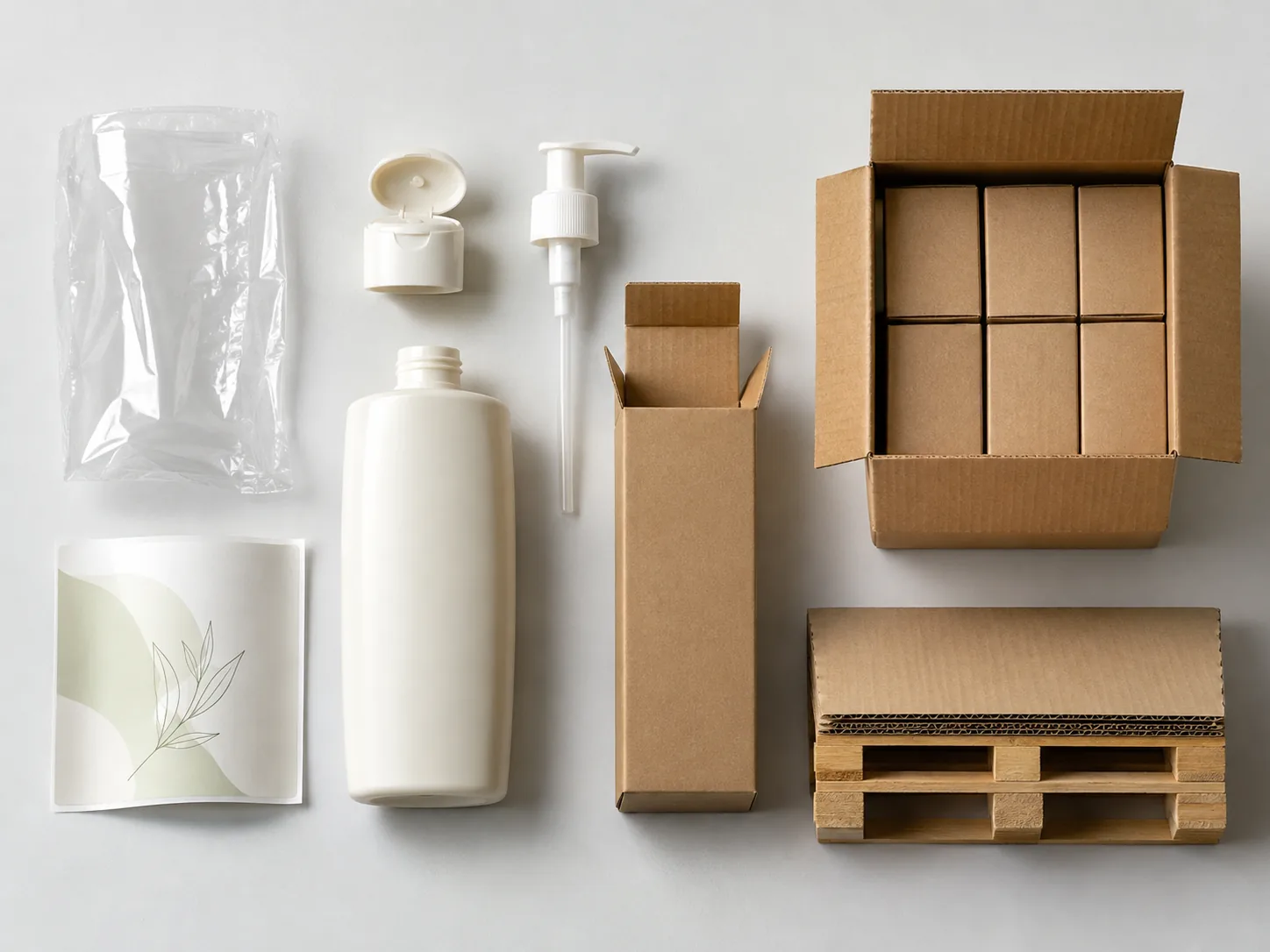
Secondary packaging changes the cost quickly: a plain bottle, a shrink-wrapped bottle, and a bottle packed with a folding carton.
4. Why the Same Formula Can Have Very Different Finished Costs
Take one standard shampoo formula and put it into three packages. A stock bottle with a flip-top and label is the cost-controlled option. Change only the closure to a pump and the package cost rises. Add premium decoration and an individual carton and the finished cost rises again.
This is why a factory quote should always be read as a specification, not just a number. If one supplier quotes a bottle with a label and another quotes a pump, carton and shrink band, the cheaper number has not actually won the comparison.
Illustrative 300mL planning ranges
| Cost layer | Typical planning range | What moves it |
|---|---|---|
| Bulk formula | USD 0.25–0.80 / bottle | Surfactant system, fragrance, actives, formula positioning |
| Bottle + closure | USD 0.15–0.60 / unit | Material, weight, shape, cap vs pump |
| Label / basic decoration | USD 0.02–0.12 / unit | Size, colors, finish, volume |
| Filling + assembly + routine QC | USD 0.05–0.25 / unit | MOQ, line efficiency, pack complexity |
| Unit carton | USD 0.08–0.30 / unit | Board, size, printing, finishing |
| Shrink / shipping pack | USD 0.02–0.10 / unit | Pack-out, master carton, pallet pattern |
These ranges are intentionally broad. They are useful for budgeting and for spotting a quote that is unusually high or unusually low; the actual price comes from the final specification and order volume.
5. Label or Silk Screen: Which One Is Cheaper?
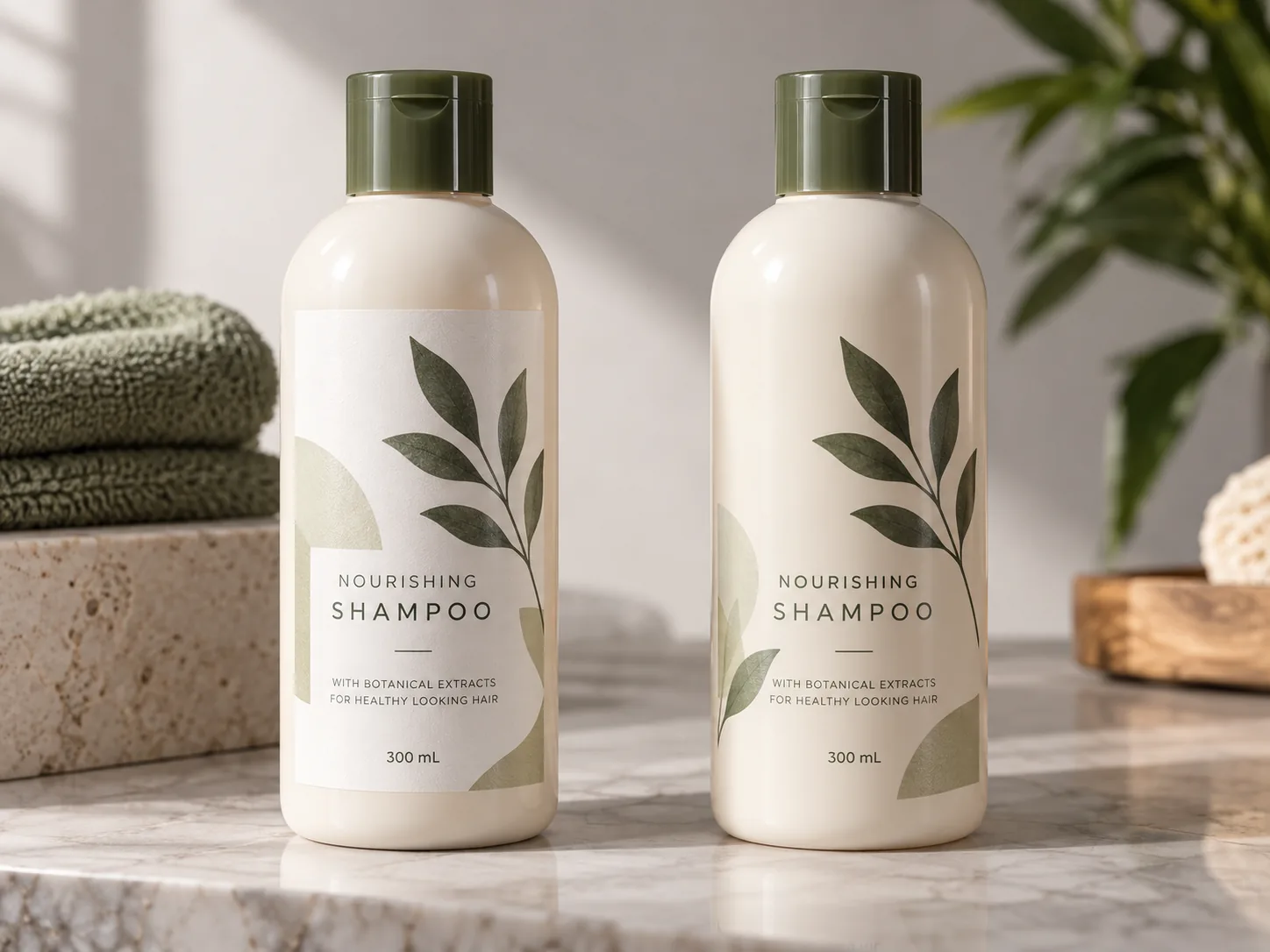
Labels are usually the better starting point for small runs because the setup is light and artwork can be changed easily. Silk screen printing becomes more attractive when the design is stable and the order is large enough to spread screen and setup costs across many bottles.
There is no useful rule that says 'labels are always cheaper' or 'silk screen is always more expensive.' A simple one-color screen print on a stable bottle can become very competitive at scale, while a short run with several colors can favor a label.
6. MOQ Is a Cost Variable
MOQ affects more than purchasing. Packaging suppliers price bottles, pumps and printed components in production quantities, while the factory also has an efficient batch size for mixing and filling. A small order can therefore carry a higher unit cost because setup, cleaning, component purchasing and handling are spread over fewer finished units.
MOQ affects more than purchasing. Packaging suppliers price bottles, pumps and printed components in production quantities, while the factory also has an efficient batch size for mixing and filling. A small order therefore carries a higher unit cost because setup, cleaning, component purchasing and handling are spread over fewer finished units. The practical lesson is simple: ask for both your launch MOQ price and a realistic reorder price.
7. What Is Often Missing From an Early Quote?
A first quote should make clear whether it includes testing and development, artwork or tooling charges, shrink bands, individual cartons, master cartons, palletization and inspection. These items are small individually but can materially change the final project budget.
Then separate the factory price from the landed cost. EXW or FOB is one number; freight, insurance, import duty, customs handling and local delivery create the next layer. Ocean freight at commercial volume can be a relatively small per-bottle amount, while air or express shipping for a small launch can add dollars per unit. Import duty is normally calculated from the customs value and tariff classification rather than as a fixed shampoo charge.
8. How to Reduce Cost Without Making the Product Cheap
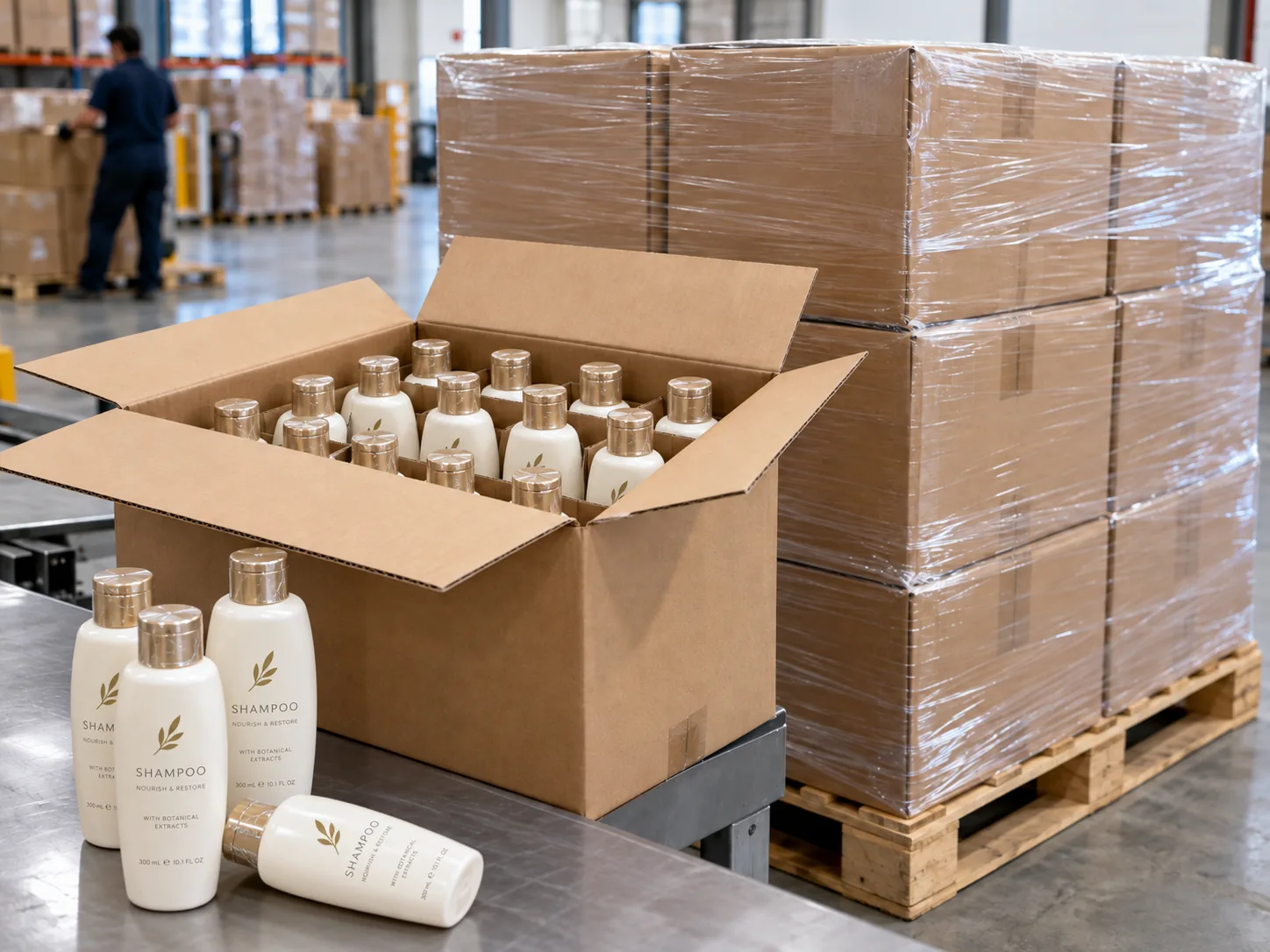
The smartest savings usually come from removing unnecessary complexity. Use packaging families across several SKUs, choose a standard bottle before paying for a new mold, limit decorative finishes during the launch stage, and order enough units to use packaging and production efficiently.
Do not cut the systems that protect product quality. Preservation, packaging compatibility, reliable filling and release QC are part of the manufacturing cost for a reason. A cheaper component that causes leakage or instability is not a saving.
9. How to Ask for a Better Shampoo OEM Quote
Give the manufacturer one clear brief: target market, product type, formula direction, fill size, expected first order, expected reorder volume, bottle and closure, decoration method, carton requirement, master-carton pack-out and testing responsibility. A reference image is useful, but the specification is what makes the quotation comparable.
For a serious comparison, ask for two quantities: the launch MOQ and a realistic reorder quantity. Also ask the supplier to separate one-time development or tooling charges from the recurring unit cost. This quickly shows which part of the price is structural and which part is simply the result of low volume.
Conclusion
You do not need to know a manufacturer's confidential cost sheet to understand shampoo pricing. For a typical 300mL product, think in layers: roughly a few tenths of a dollar for the formula, a few tenths for the primary package and decoration, another fraction for manufacturing and packing, and then logistics and import costs on top. The biggest price movements usually come from formula positioning, packaging choices and order volume.
A good OEM/ODM quotation should make those choices visible. Once the specification is fixed, comparing suppliers becomes much easier because you are comparing the same product rather than two different versions of it.
About the Manufacturer
We help hair and body care brands turn product concepts into workable OEM/ODM projects, covering formula development, packaging selection, decoration, testing coordination and manufacturing. If you already have a target price or packaging concept, we can work backwards from the commercial goal and build a practical specification.